Same-day crowns vs traditional crowns compares two workflows for restoring a damaged or weakened tooth. A same-day crown is digitally scanned, designed, milled, and placed during one visit when the tooth and schedule are suitable. A traditional crown is usually fabricated by a dental laboratory and placed at a later appointment, with a temporary crown protecting the tooth in between.
Both workflows can produce a functional, natural-looking restoration. At Smile Maker PA in Southampton, PA, the choice depends on the tooth, material, bite, cosmetic demands, supporting treatment, and whether one-visit fabrication is appropriate.
Same-day crowns vs traditional crowns: quick comparison
| Factor | Same-day crown | Traditional crown |
|---|---|---|
| Main visits | Often prepared and placed in one visit | Usually preparation plus a later placement visit |
| Impression | Digital scan | Digital scan or physical impression |
| Fabrication | Designed and milled in the office | Made by a dental laboratory |
| Temporary crown | Often unnecessary | Commonly used between visits |
| Material choice | Limited to materials compatible with in-office milling | Broader laboratory material and layering options |
| Adjustments | Completed during the same appointment | Evaluated when the final crown returns |
| Best use | Suitable cases where efficiency and available material align | Complex color, material, or laboratory requirements |
1. Why a tooth may need a crown
A crown covers and protects a tooth when a filling alone may not provide enough support. Crowns may be recommended for a large cavity, fracture, extensive existing restoration, severe wear, or a tooth that has had root canal treatment. They may also restore an implant or change a tooth's shape when clinically appropriate.
The need for a crown is separate from the fabrication method. A same-day workflow does not mean every damaged tooth can be restored immediately. Decay, infection, gum condition, remaining tooth structure, and bite must be evaluated first.
2. The same-day crown process
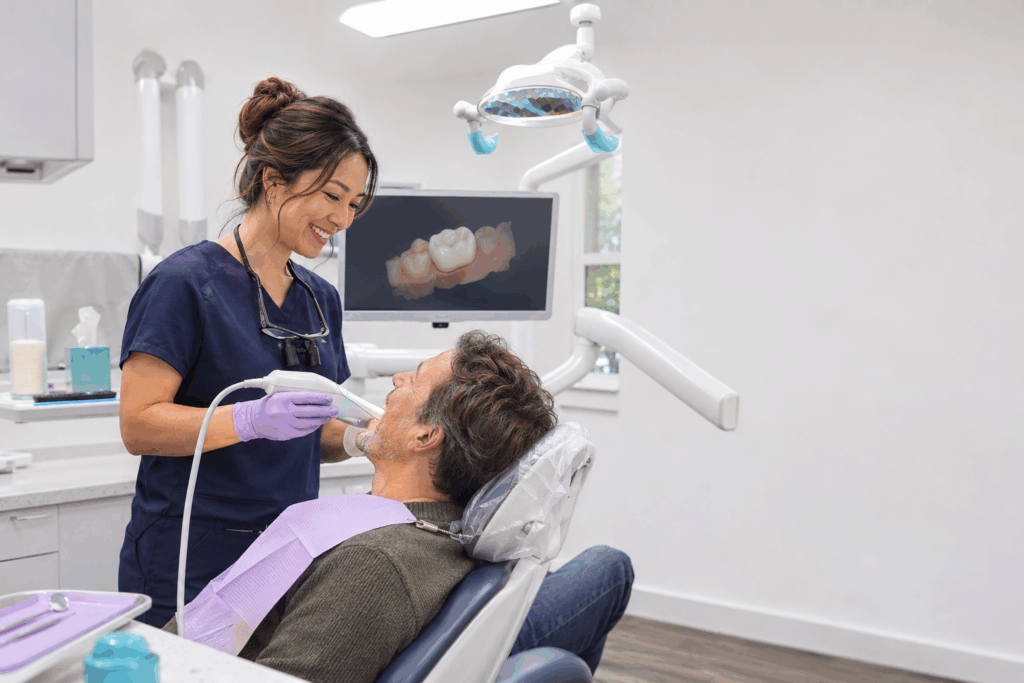
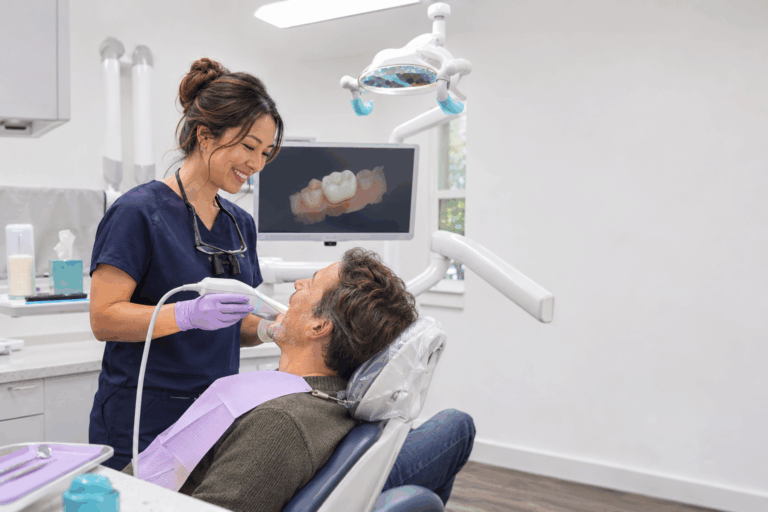
For a same-day crown, the tooth is numbed and prepared. A digital scanner records the tooth and bite. The restoration is designed with dental software, milled from a ceramic block, refined, polished or characterized, tried in, adjusted, and bonded or cemented.
The appointment is longer than a short preparation visit because design and fabrication occur while the patient is in the office. The advantage is avoiding a return placement appointment and, in many cases, avoiding a temporary crown.
3. The traditional crown process
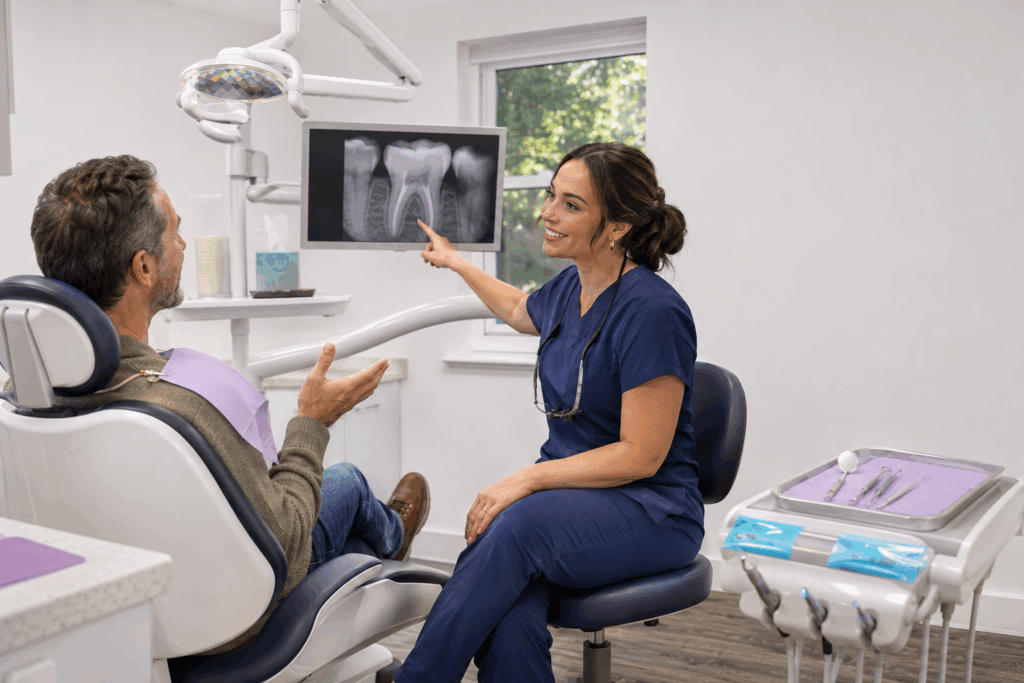
For a traditional dental crown, the dentist prepares the tooth and records it with a scan or impression. A temporary crown protects the tooth while a laboratory makes the final restoration. At the next visit, the temporary is removed and the final crown is evaluated for fit, contacts, bite, and appearance before placement.
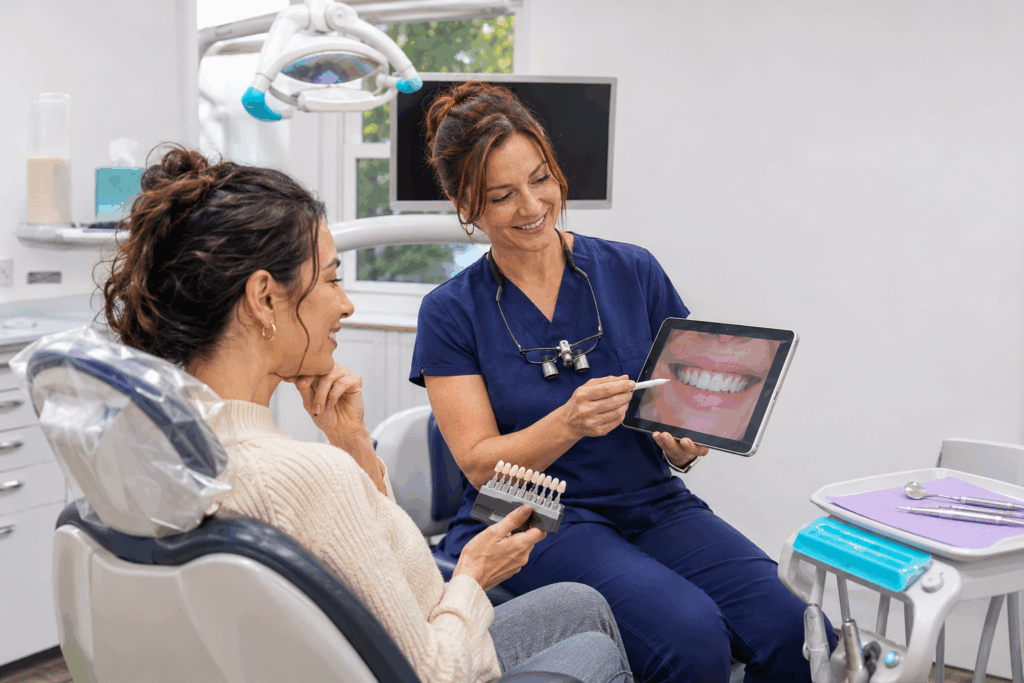
Laboratory fabrication may be preferred when the case requires a material not available for in-office milling, detailed ceramic layering, or close color matching in a highly visible area.
4. Materials and appearance
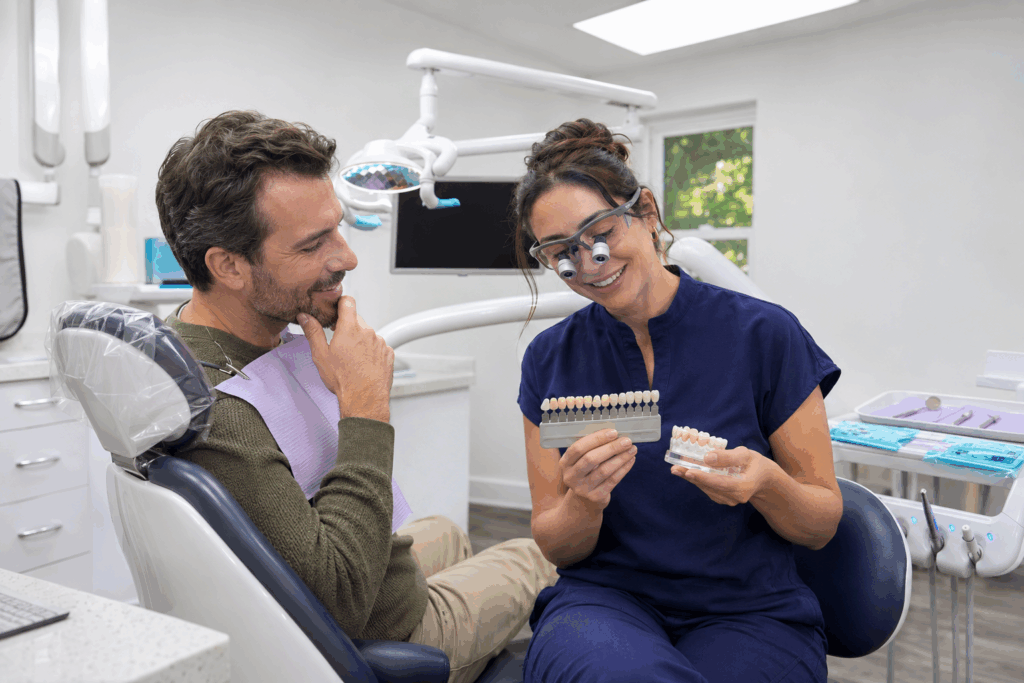
Same-day systems commonly mill ceramic materials selected for strength and appearance. Traditional laboratories may fabricate ceramic, zirconia, porcelain-fused-to-metal, metal, or layered restorations depending on the case.
The National Institute of Dental and Craniofacial Research describes crowns as indirect restorations that can be made through digital design, milling, or other fabrication methods in its dental materials overview.
No material is best for every tooth. Front-tooth translucency, back-tooth forces, available clearance, grinding, opposing restorations, and allergies all affect selection.
5. Fit, scans, and bite adjustments
Digital scans can be used for both same-day and laboratory crowns. Accuracy depends on preparation design, moisture control, scanning or impression quality, manufacturing, and clinical adjustment.
Every crown must be evaluated for its margin, contact with neighboring teeth, and bite. A crown that feels high, traps food, causes persistent discomfort, or becomes loose should be checked promptly.
Same-day crowns vs traditional crowns is therefore not a comparison between accurate and inaccurate dentistry. Both require careful records and final evaluation.
6. Temporary crown considerations
A traditional crown usually involves a temporary restoration. Patients should avoid very sticky or hard foods and clean carefully around it. If the temporary comes off or breaks, contact the dental office rather than leaving the tooth uncovered.
Same-day fabrication often eliminates the temporary stage. That can be helpful for patients who travel, have difficulty returning, or want to reduce the risk of temporary-crown problems. However, convenience should not override material or clinical requirements.
7. Same-day crowns vs traditional crowns cost
Cost depends on the tooth, material, buildup or post needs, imaging, gum treatment, laboratory work, insurance benefits, and whether root canal treatment is required. A same-day crown is not automatically cheaper or more expensive.
Ask whether the estimate includes the examination, imaging, core buildup, temporary crown when needed, final restoration, and follow-up adjustments. Dental insurance coverage and annual limits vary.
How long do crowns last?
Crowns are durable but not permanent. Decay can develop at the margin, cement can fail, ceramic can chip, and the tooth or root can fracture. Grinding and biting hard objects increase stress.
Brush with fluoride toothpaste, clean between the crowned tooth and its neighbors, attend examinations, and wear a night guard if recommended. Contact the office for pain, swelling, movement, a bad taste, a changed bite, or a chipped restoration.
Choosing the crown workflow
Same-day crowns vs traditional crowns should be decided after the dentist identifies the material and design needed. Same-day treatment may be a strong choice when an in-office ceramic and one-visit workflow fit the tooth. Traditional laboratory fabrication may be better when material selection or detailed characterization is the priority.
Schedule a crown evaluation
For a damaged, cracked, or heavily restored tooth, call Smile Maker PA at (215) 969-2015, review the practice's restorative dentistry services, or request a Dental Appointment.
FAQ about same-day crowns vs traditional crowns
Are same-day crowns as strong as traditional crowns?
They can be strong and appropriate when the selected material and design fit the tooth. Strength depends on material, thickness, bonding, tooth support, and bite forces rather than appointment count alone.
Do same-day crowns look natural?
Yes, many can look natural. A laboratory-made crown may be preferred for certain front teeth or complex color matching that benefits from detailed ceramic layering.
Does a same-day crown take all day?
The appointment is usually longer than a crown preparation visit because scanning, design, milling, finishing, and placement occur in one visit. Exact timing varies.
Is a temporary crown always needed?
It is commonly used in the traditional workflow. It is often unnecessary when a same-day crown is prepared and placed during one appointment.
Can every tooth receive a same-day crown?
No. Material needs, deep decay, gum treatment, infection, limited tooth structure, bite, or cosmetic complexity may require a different sequence.
Will insurance cover a same-day crown?
Coverage depends on the plan, diagnosis, procedure code, deductible, and annual maximum. The office can provide an estimate, but the insurer determines benefits.