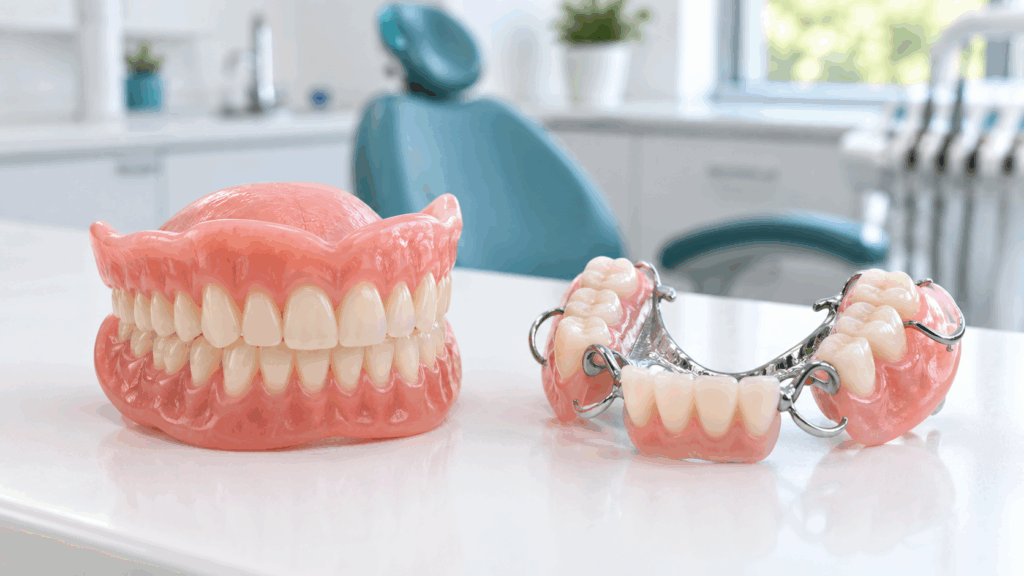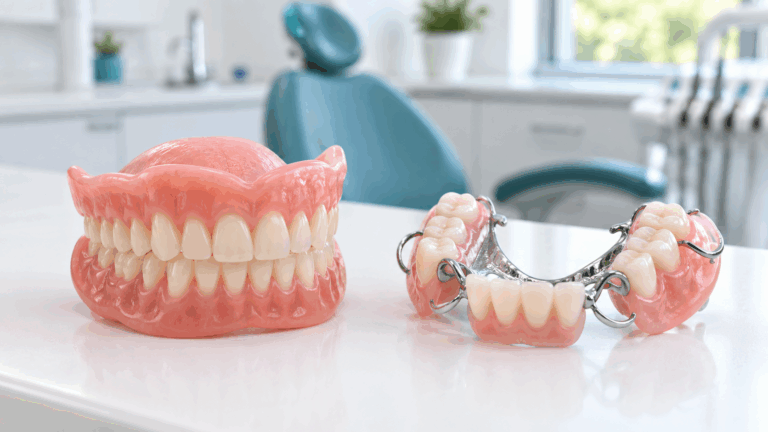
Full dentures vs partial dentures comes down to one main difference: full dentures replace all teeth in an upper or lower arch, while partial dentures replace several missing teeth and fit around natural teeth that remain. Both are removable tooth-replacement options, but their design, support, care, and candidacy are different.
At Smile Maker PA in Southampton, PA, an exam can help determine which approach fits your mouth, remaining teeth, comfort goals, and budget. The decision is not based only on how many teeth are missing. The health and position of the remaining teeth, gum condition, jaw support, bite, and long-term treatment goals also matter.
For patients researching full dentures vs partial dentures in Southampton, this guide explains the practical differences without assuming that one removable option is right for everyone.
Full dentures vs partial dentures: the direct answer
Choose full dentures when an entire arch has no usable natural teeth or the remaining teeth cannot be predictably maintained. Choose partial dentures when several teeth are missing but the remaining teeth are healthy enough to help support the appliance. A dentist must examine the mouth before recommending either option.
What are full dentures?
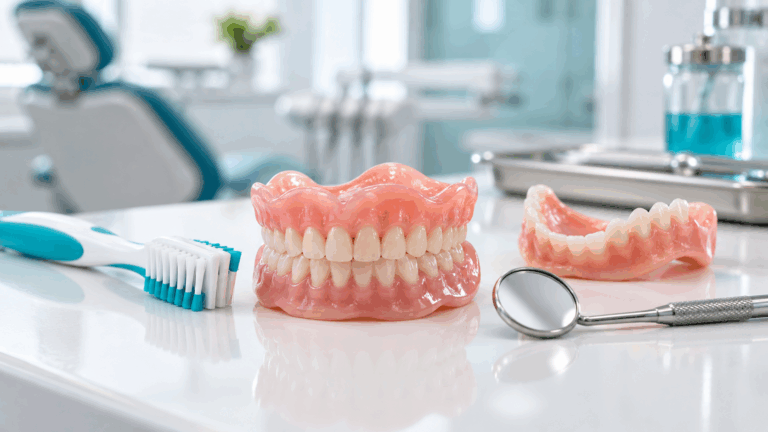
Full dentures replace all teeth in the upper arch, lower arch, or both. The denture base rests on the gums and is shaped to fit the tissues of the mouth. An upper denture may also cover part of the palate, while a lower denture is shaped around the tongue.
Full dentures may be considered after teeth have already been lost or when remaining teeth are severely damaged, loose, infected, or otherwise cannot be restored. If teeth must be removed first, the treatment plan may include healing time, temporary teeth, and later adjustments as the gums and bone change.
What are partial dentures?
Partial dentures replace one or more missing teeth while preserving useful natural teeth. A partial typically includes replacement teeth attached to a base and a framework or clasps that help hold it in position.
Because a partial depends partly on the teeth and tissues around it, those supporting areas must be healthy enough for the design. Cleaning the natural teeth, the appliance, and the spaces around clasps is important for long-term comfort and oral health.
Full dentures and partial dentures compared
| Question | Full dentures | Partial dentures |
|---|---|---|
| What do they replace? | Every tooth in one arch | Several missing teeth in an arch |
| Are natural teeth retained? | No natural teeth remain in the treated arch | Healthy natural teeth remain |
| How are they supported? | Mainly by the gums and underlying ridge | By gums plus selected natural teeth or attachments |
| Are they removable? | Yes | Yes |
| What requires daily cleaning? | Denture, gums, tongue, and palate | Denture, remaining teeth, gums, and spaces around clasps |
| May the fit change? | Yes, as gum and bone contours change | Yes, especially if supporting teeth or tissues change |
| Can implants be considered? | Implants may help stabilize or replace a full denture | Implants or a bridge may replace selected missing teeth in some cases |
Who may be a candidate?
Full dentures may fit a patient who has lost all teeth in an arch or whose remaining teeth have a poor long-term outlook. Partial dentures may fit a patient who has multiple gaps but also has stable natural teeth worth preserving.
Before recommending dentures for missing teeth, Smile Maker PA evaluates:
- The number and location of missing teeth
- The condition of remaining teeth and existing restorations
- Gum health and available bone support
- Bite balance and chewing needs
- Hand dexterity and ability to clean a removable appliance
- Appearance, comfort, timing, and budget priorities
If a tooth is painful or cannot be saved, the plan may also include tooth extraction and a discussion of replacement timing.
What affects the cost of dentures?
There is no single fee that applies to every denture case. Cost factors can include whether one or both arches need treatment, the number of teeth being replaced, materials, the design of a partial, extractions, temporary appliances, follow-up adjustments, relining, and whether implants are included.
In a full dentures vs partial dentures cost comparison, preserving healthy teeth and designing support around them can change both the treatment steps and the estimate.
Dental benefits and financing also vary. A written treatment plan after an exam is more useful than an online average because it shows which steps apply to your mouth.
What should you expect while adjusting?
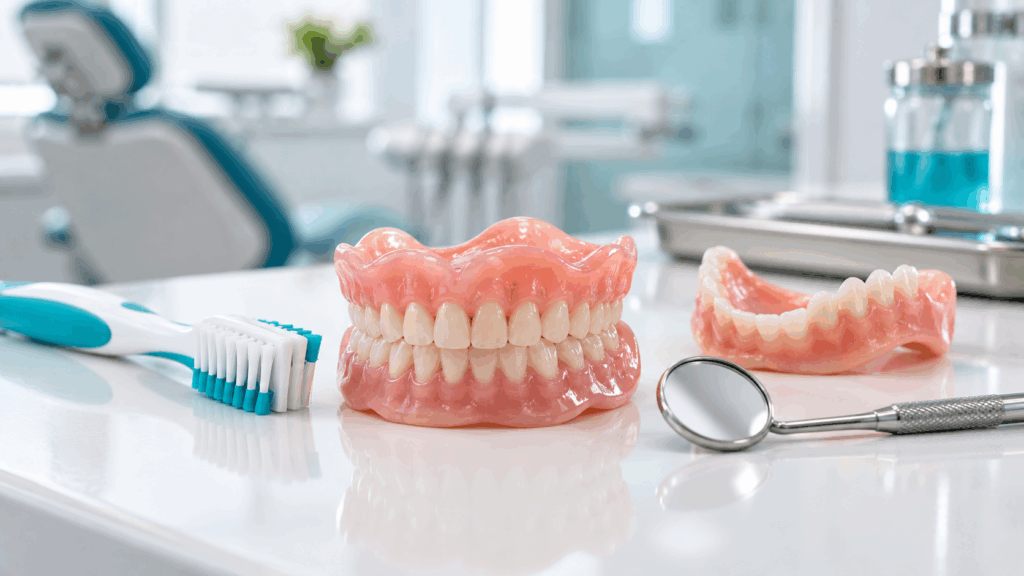
New removable dentures can initially feel bulky. Speech and chewing may require practice, and sore areas may need professional adjustment. Begin with manageable foods, chew on both sides when possible, and follow the wearing and cleaning instructions provided for your appliance.
Do not try to reshape or repair a denture at home. A small change can alter the bite or damage the appliance. Persistent pain, recurring sores, clicking, looseness, or difficulty eating should be evaluated.
The full dentures vs partial dentures adjustment process also differs because a partial must work with natural teeth that remain.
The American Dental Association's denture care guidance also notes that adhesive is not a remedy for a poorly fitting denture. A loose appliance may need an adjustment, reline, repair, or replacement.
Alternatives to removable dentures
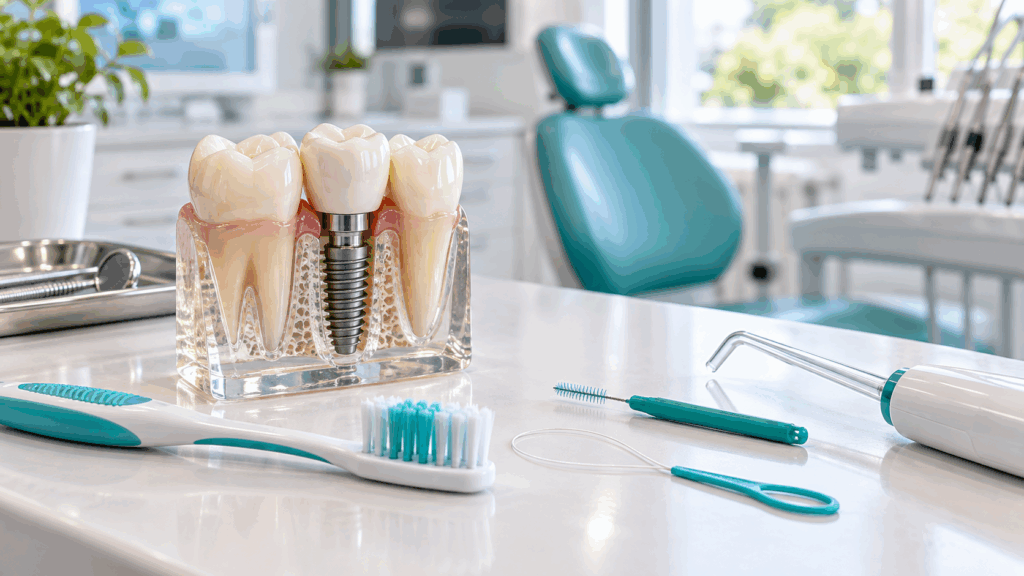
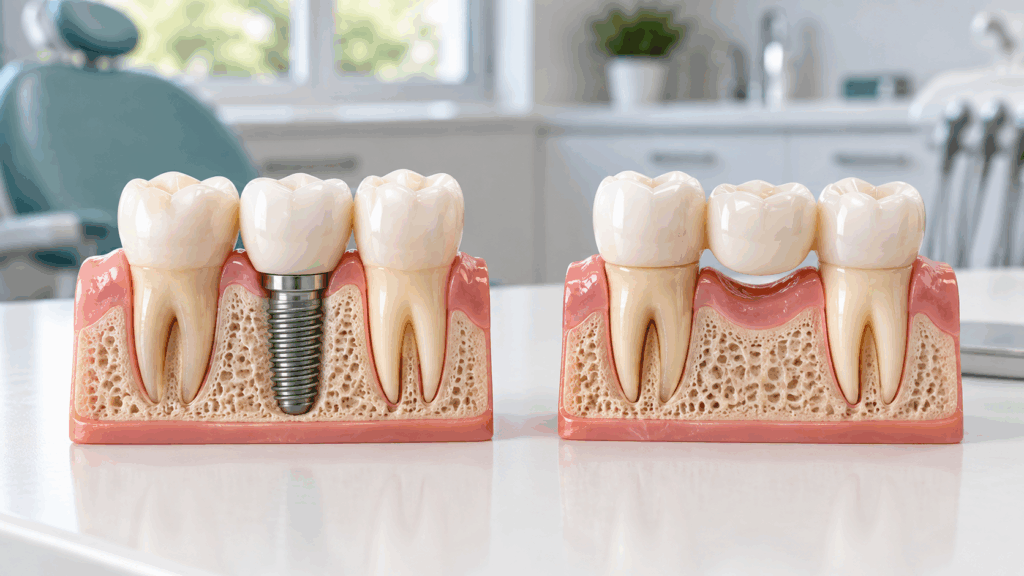
Removable dentures are not the only way to replace missing teeth. Depending on the number of missing teeth and the condition of the mouth, alternatives may include a fixed dental bridge, one or more dental implants, an implant-retained denture, or a fixed full-arch restoration.
Implants can improve stability for some patients, but they require an individual evaluation of bone, gum health, medical history, and treatment goals. The best option is the one that offers a realistic balance of health, function, maintenance, timing, and cost.
A full dentures vs partial dentures discussion can therefore include fixed or implant-supported alternatives when those choices fit the patient's health and goals.
Choosing a type of denture with your dentist
A useful consultation should answer more than “full or partial?” Ask which teeth can be maintained, how the appliance will be supported, what it may feel like, how to clean it, how often it should be checked, and which future changes might require a reline or replacement.
Smile Maker PA can compare full dentures, denture partials, and dental implants based on your needs.
The final full dentures vs partial dentures recommendation should reflect which teeth can be preserved, how the appliance will be supported, and what you can maintain comfortably at home.
Reviewing full dentures vs partial dentures with diagnostic findings makes the decision more useful than comparing appliance names alone.
Schedule a denture consultation in Southampton, PA
If you are comparing full dentures vs partial dentures, schedule a denture consultation with Smile Maker PA at 1775 Street Rd., Southampton, PA 18966. Call (215) 969-2015 or request a Dental Appointment.
Bring your questions about full dentures vs partial dentures so the team can address fit, care, timing, and alternatives during the visit.
FAQ about full dentures vs partial dentures
Which is better, full dentures or partial dentures?
Neither is universally better. Full dentures replace all teeth in an arch, while partial dentures preserve and work around suitable natural teeth. Your remaining teeth and tissues determine which option is appropriate.
That is why a full dentures vs partial dentures recommendation should always follow an examination.
Can partial dentures eventually become full dentures?
Yes. If remaining natural teeth are later lost or can no longer be maintained, a new full denture may be considered. A partial is not simply converted in every case; the mouth and appliance must be evaluated.
This possible change is another reason to review full dentures vs partial dentures as part of a long-term plan.
How long do full and partial dentures last?
Their useful life varies with fit, wear, oral changes, cleaning, and damage. Dentures should be examined regularly and assessed sooner if they become loose, painful, cracked, worn, or difficult to use.
The full dentures vs partial dentures lifespan comparison also depends on supporting teeth, tissue changes, and daily care.
Are dentures painful?
New dentures may cause temporary pressure or sore spots, but ongoing pain is not something to ignore. Professional adjustments can address many fit-related problems.
Can I eat normally with dentures?
Many people eat a varied diet after an adjustment period, although some foods require more care. Start gradually, use both sides for chewing, and ask for an evaluation if the denture moves or causes pain.
Are dental implants an alternative to dentures?
Yes. Dental implants may replace individual teeth, support a bridge, stabilize a removable denture, or support a fixed full-arch restoration, depending on candidacy.