When Should You Call an Emergency Dentist?
Contact a dentist promptly when pain or damage affects your ability to eat, sleep, or use your teeth comfortably. You do not need to diagnose the problem before calling.
Severe or Persistent Tooth Pain
A toothache that keeps you awake, hurts when you bite, or continues to worsen needs an examination. Tell our team where the pain is, how long it has lasted, and whether you also have swelling or sensitivity.
Swollen Gums, Facial Swelling, or Suspected Infection
Swelling, a bad taste, fever, or tenderness around a tooth can be signs of an infection. A dental abscess needs urgent dental treatment and will not resolve on its own. Seek emergency medical care if swelling affects your breathing or swallowing. Learn more about dental abscess warning signs.
Broken, Cracked, or Knocked-Out Teeth
Call promptly after a dental injury, especially if a tooth is loose, displaced, painful, or completely knocked out. A knocked-out permanent tooth is time-sensitive and requires immediate dental attention.
Lost Fillings, Crowns, or Other Restorations
A missing restoration can leave a tooth sensitive or vulnerable to further damage. Contact us even if it does not hurt. We can evaluate the tooth and discuss appropriate restorative dentistry options.
What to Do Before Your Dental Appointment
A few simple steps may help protect the area while you arrange care:
- For a toothache: Gently rinse with warm water. Do not place aspirin directly on the tooth or gums.
- For a cracked tooth: Rinse gently and apply a cold compress to the outside of your face if there is swelling.
- For a lost crown or filling: Avoid chewing on the affected side and bring the restoration if you have it.
These steps do not replace an examination. See the American Dental Association’s dental emergency guidance for additional first-aid information.
If a Permanent Tooth Is Knocked Out
Hold the tooth by the crown—the part normally visible above the gums—and avoid touching the root. If dirty, rinse it gently without scrubbing. If you can safely place it back in its socket, do so gently without forcing it. Otherwise, keep it moist in milk or a tooth-preservation solution and seek immediate dental care. Do not let it dry out or store it in tap water.
Do not reinsert a baby tooth. Read the American Association of Endodontists’ knocked-out tooth instructions.
What Happens During an Emergency Dental Visit?
The first step is understanding the cause of your symptoms. Your visit may include:
- A discussion of your symptoms and health history. Tell the dentist about recent injuries, medications, allergies, and previous treatment.
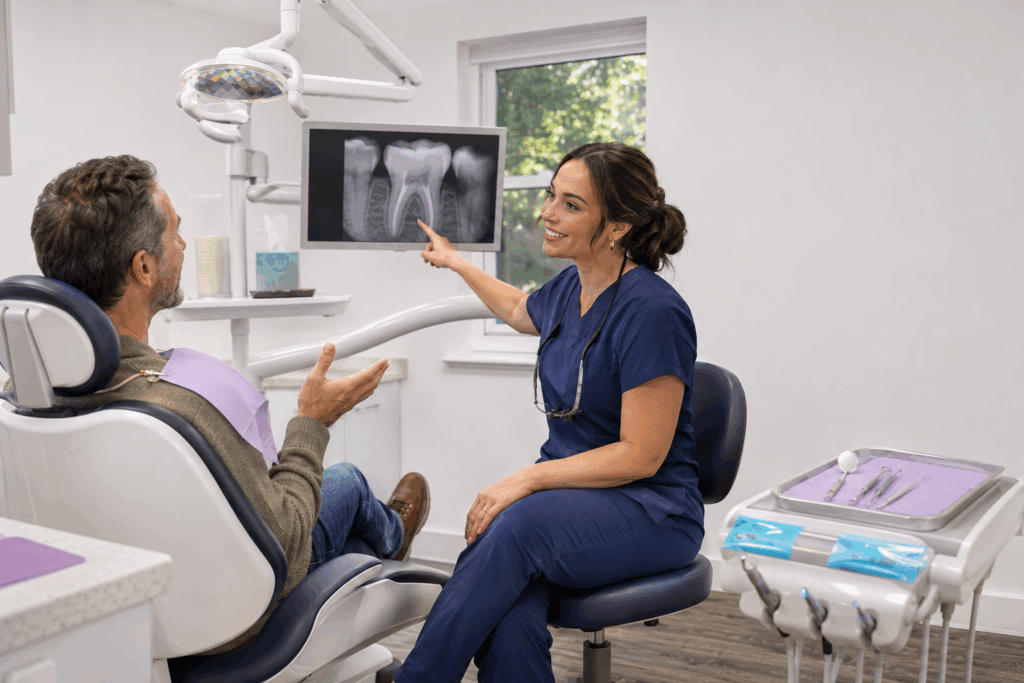
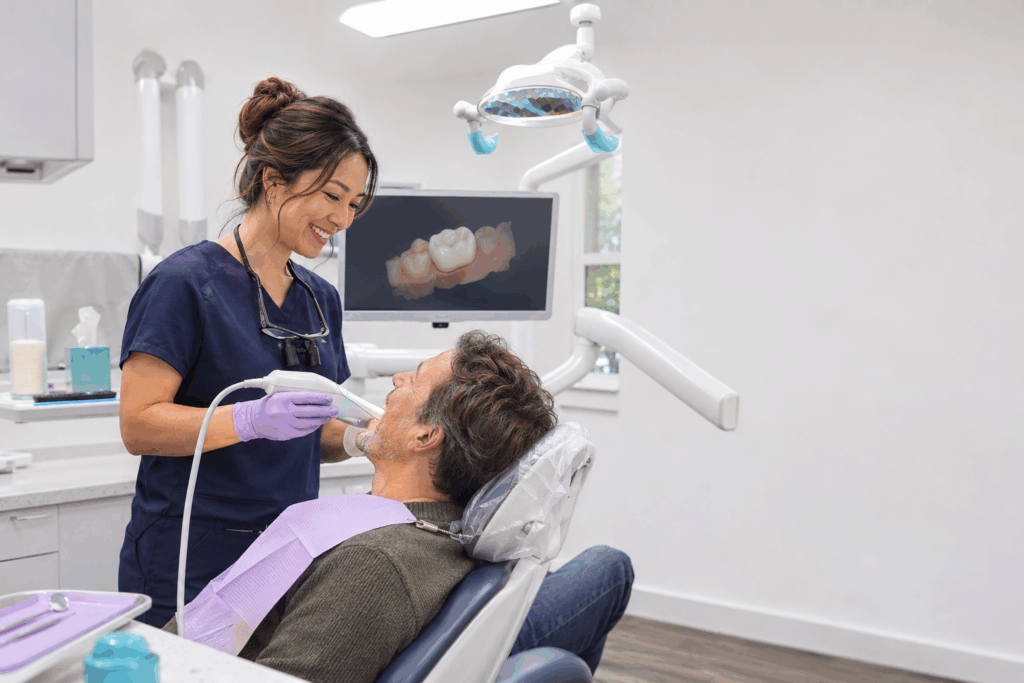
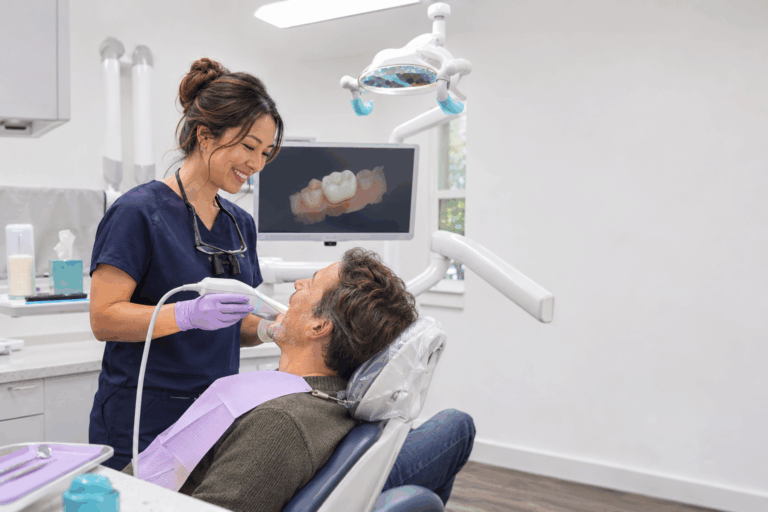
- An examination and imaging when needed. The dentist evaluates the affected tooth and surrounding tissues.
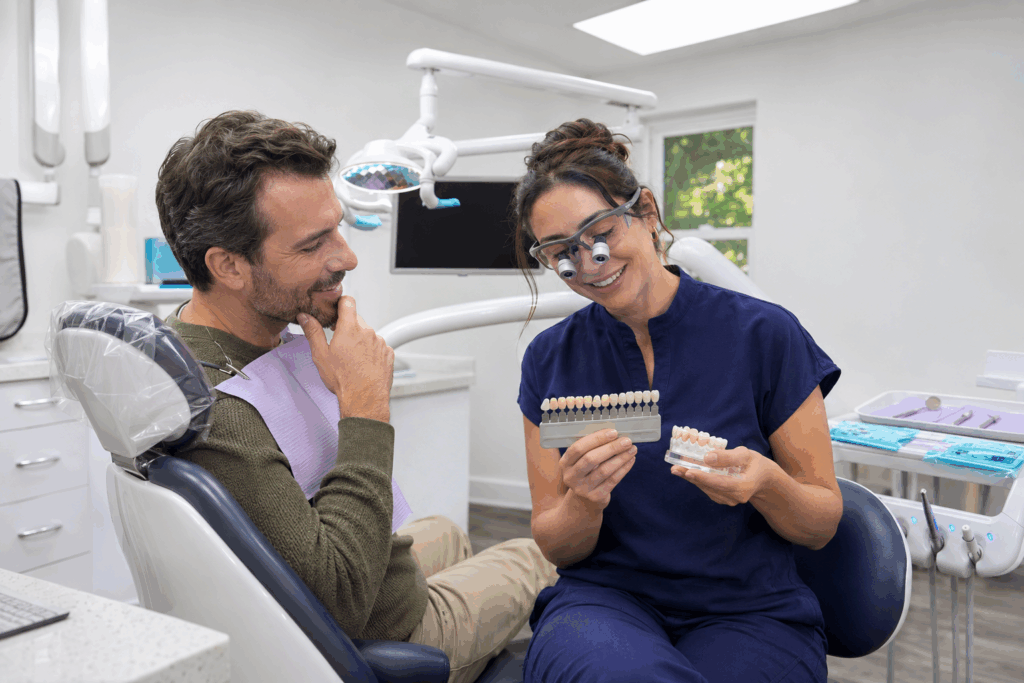
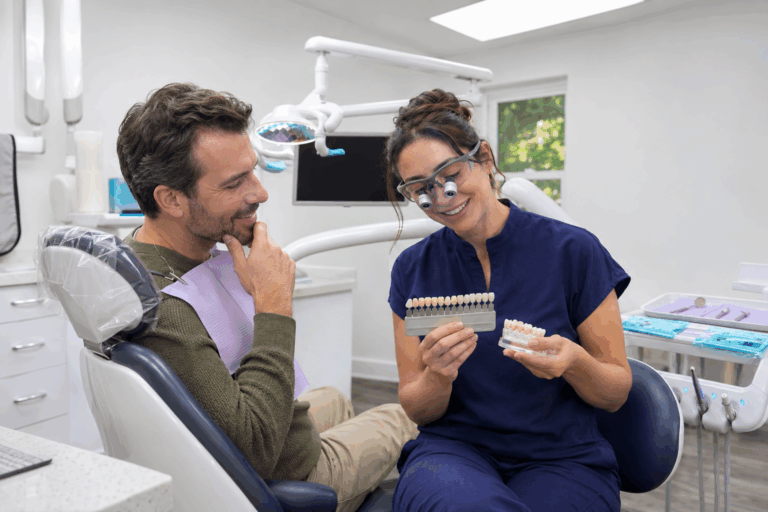
- An explanation of your options. Treatment depends on the diagnosis, the condition of the tooth, and your health needs.
- A plan for immediate and follow-up care. Some problems need more than one visit or a referral.
Depending on the findings, treatment may involve repairing a tooth or restoration, treating an infection, or considering a tooth extraction when a tooth cannot be preserved.
Feeling anxious? Let us know when you call so we can discuss your concerns before your visit. You can also meet our dentists before your appointment.
Emergency Dental Costs and Insurance
Emergency dental costs depend on the examination, any necessary imaging, and the treatment recommended. Ask about fees when arranging your appointment.
Bring your dental insurance information if you have coverage. Our team can discuss benefits and available payment arrangements. You can also review our dental financing and insurance information before your visit.
Emergency Dentist FAQs
Can I get a same-day emergency dental appointment?
Call (215) 969-2015 to ask about current availability. Appointment timing depends on your symptoms, clinical needs, and the schedule. Calling before you travel helps us guide you to the appropriate next step.
Should I go to a dentist or the emergency room?
Call a dentist promptly for tooth pain, a damaged restoration, or a dental injury. For difficulty breathing or swallowing, severe uncontrolled bleeding, or major facial trauma, seek emergency medical attention immediately.
What if my tooth stops hurting?
A change in pain does not confirm that the underlying problem has resolved. Keep your appointment or call the office before deciding to delay care.
Will an emergency visit mean losing my tooth?
An emergency examination does not automatically mean an extraction. The dentist will evaluate whether the tooth can be repaired or preserved and explain the available options.
Can I request an emergency appointment online?
For an urgent problem, calling is the best first step. Online appointment requests may not be reviewed immediately and do not confirm an appointment time.
Call Smile Maker PA for Emergency Dental Care
Smile Maker PA is located at 1775 Street Rd., Southampton, PA 18966.
For tooth pain, swelling, or a dental injury, call (215) 969-2015 and describe your symptoms. For directions and office information, visit our contact page.
Helpful Emergency Dental Guides