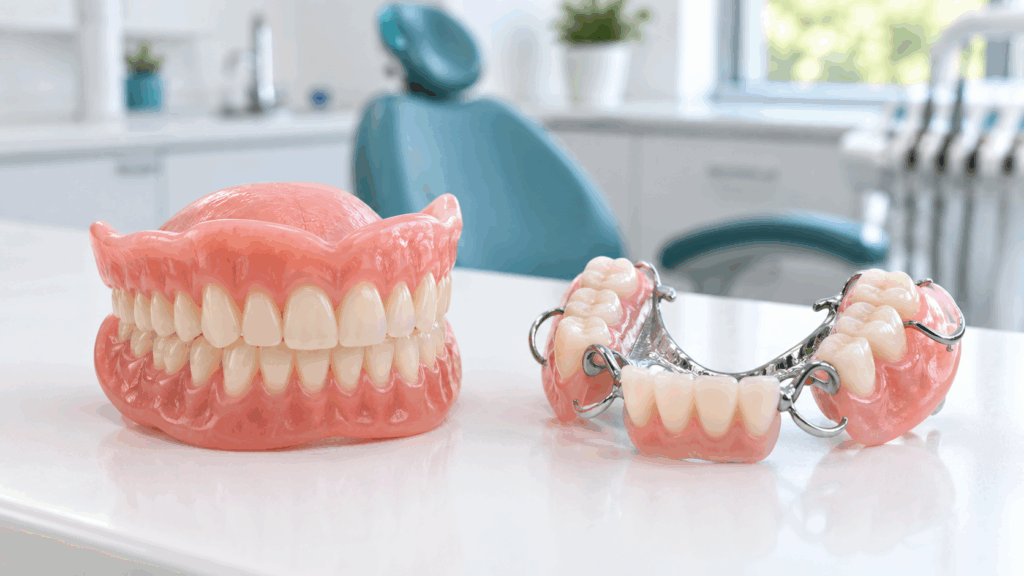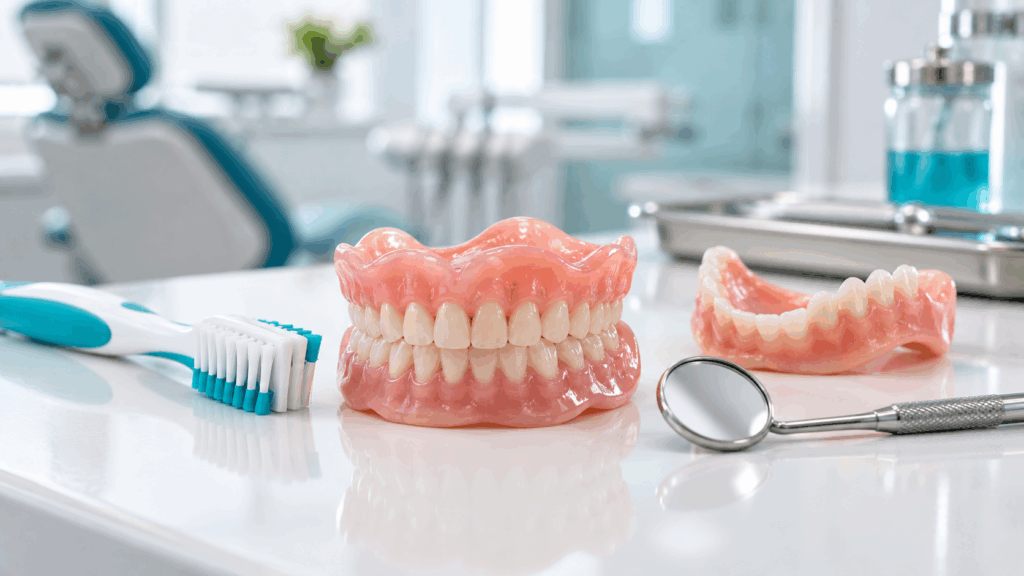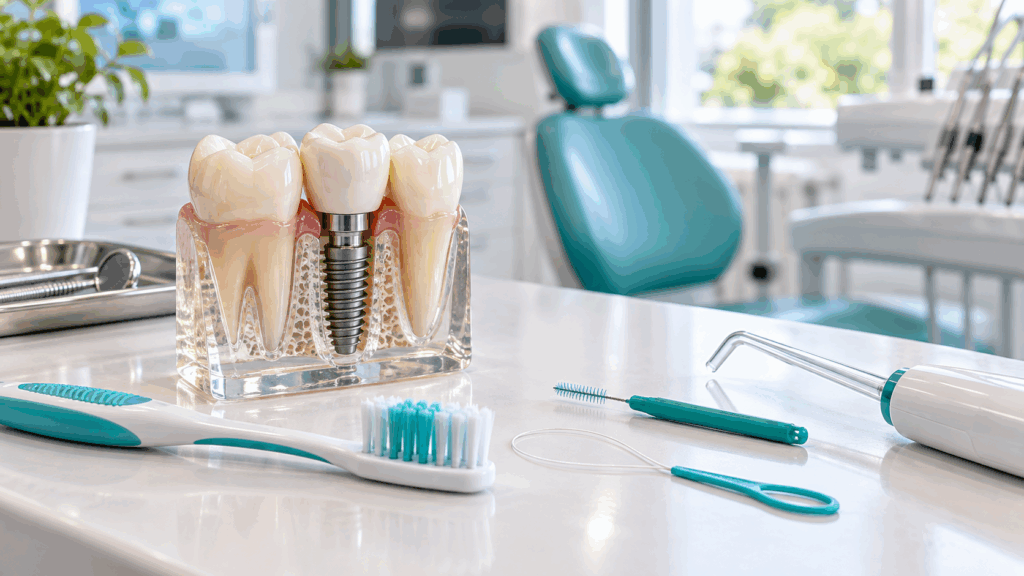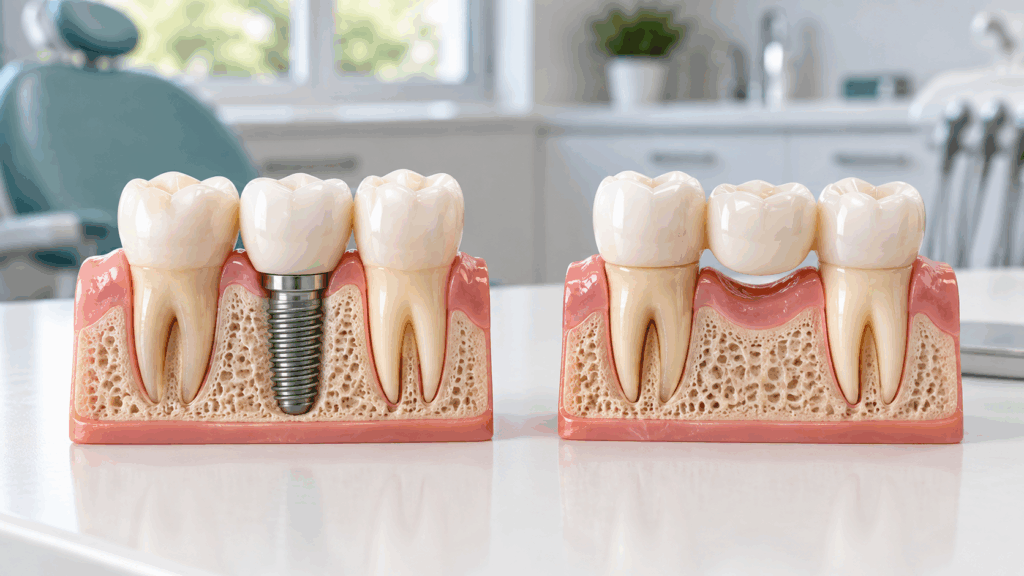
How long do dentures last? Many dentures remain useful for several years, but there is no automatic expiration date that applies to every patient. The appliance wears over time, and the gums and jaw beneath it continue to change. A denture may need a reline, repair, or replacement when its fit, strength, bite, appearance, or function no longer meets your needs.
The American College of Prosthodontists recommends that complete and partial dentures be evaluated for replacement when problems develop and when the denture has been in service for more than five years. That does not mean every five-year-old denture must be replaced. It means an exam is appropriate rather than assuming an older appliance still fits correctly.
When patients ask how long do dentures last, the most useful answer combines the age of the appliance with how it fits, looks, and functions today.
How long do dentures last in everyday use?
A commonly discussed range is about five to ten years, but the actual timeline varies. Some dentures need attention earlier because of a crack, tooth wear, major tissue changes, or loss of a supporting tooth. Others remain functional longer with good care and regular evaluation.
So, how long do dentures last before professional review is needed? Do not wait for a specific anniversary if the appliance is loose, painful, damaged, or difficult to clean.
The age of the denture is only one factor. Fit, stability, chewing ability, comfort, bite, cleanliness, and the condition of the mouth are more important than the calendar alone.
Denture reline vs repair vs replacement
These services solve different problems:
| Service | What it addresses | Typical situation |
|---|---|---|
| Denture reline | Refits the tissue-facing surface | The denture is intact but has become loose as gums and bone changed |
| Denture repair | Fixes a damaged part | A crack, fracture, broken tooth, or damaged clasp may be repairable |
| Denture replacement | Creates a new appliance | The denture is worn, unstable, repeatedly repaired, unattractive, or no longer supports a healthy bite |
A reline cannot correct every problem. If the teeth are badly worn, the bite has collapsed, the base is damaged, or the design no longer fits the mouth, a new denture may be the more predictable choice.
Seven signs a denture needs evaluation
Schedule an exam if you notice:
- New looseness, slipping, or clicking
- Recurring sore spots, redness, or ulcers
- Difficulty chewing foods you previously managed
- A visible crack, missing denture tooth, or damaged clasp
- A change in your bite, speech, or facial support
- A need for increasing amounts of adhesive to keep the denture in place
- Persistent odor, bad taste, or buildup that does not resolve with proper cleaning
Sudden damage should be addressed promptly. Avoid household glue and do-it-yourself repair kits because they can damage the material, introduce unsafe substances, or make professional repair more difficult.
When asking how long do dentures last, these changes matter more than age alone because they show whether the appliance is still functioning safely.
Why do gums and fit change?
After teeth are lost, the shape of the gum-covered ridge can gradually change. Weight changes, medical conditions, dry mouth, medications, tooth loss, and changes in supporting teeth can also affect how a denture sits.
Because these changes may be gradual, a patient can adapt to a poor fit without realizing how much function has been lost. Regular general dentistry visits give the dental team a chance to evaluate the oral tissues, bite, appliance, and any natural teeth that remain.
How often should dentures be relined?
There is no universal reline schedule. A reline is considered when the denture base is still serviceable but no longer closely adapts to the tissues. Some patients need one after healing from extractions; others need relining later as the ridge changes.
A dentist should first determine why the denture feels loose. A fit problem may come from tissue changes, but it can also reflect a damaged denture, an altered bite, a problem with supporting teeth, or oral inflammation that needs treatment.
The answer to how long do dentures last after a reline depends on the condition of the base, denture teeth, bite, and ongoing tissue changes.
Daily denture care that protects the appliance
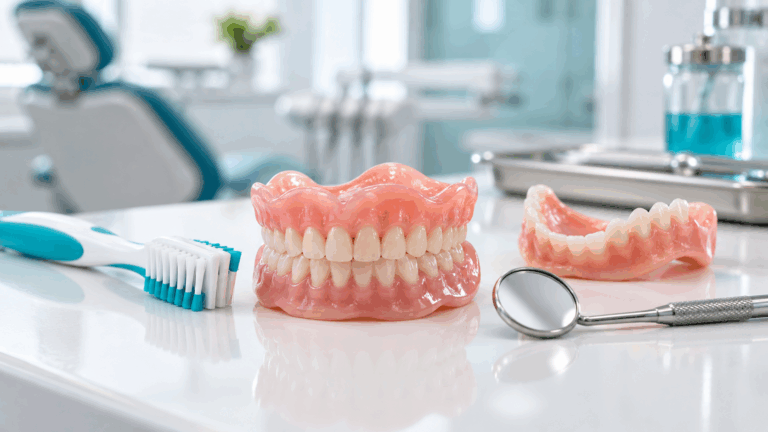
Good denture care helps control plaque, stains, odor, and irritation, but it cannot prevent all age-related changes. Follow the instructions provided for your specific appliance.
- Remove and rinse the denture after meals when practical
- Brush it daily with a soft denture brush and an appropriate nonabrasive cleanser
- Clean your gums, tongue, palate, and any remaining natural teeth
- Keep the denture moist when it is out of the mouth
- Avoid hot or boiling water, which can warp the base
- Remove adhesive from the denture and mouth every day
- Store the appliance away from pets and accidental damage
The American Dental Association explains that full and partial dentures can collect plaque and calculus like natural teeth. It also advises that adhesive is not a solution for an ill-fitting denture.
Good daily care supports the appliance, but it does not create one fixed answer to how long do dentures last.
Can denture adhesive fix loose dentures?
Adhesive may add retention to a properly fitting denture when used as directed. It should not be used to mask an ongoing fit problem or to avoid an exam. If you need more adhesive than before, apply it repeatedly, or cannot function without it, schedule a fit evaluation.
Loose dentures can rub the tissues, trap food, reduce chewing efficiency, and contribute to sores. The answer may be a small adjustment, a reline, a repair, or a new appliance depending on what the exam shows.
If adhesive use is increasing, ask how long do dentures last with the current fit instead of simply adding more product.
When is replacement necessary?
Replacement may be recommended when the appliance no longer fits well, the teeth or base are worn or discolored, repairs keep failing, the bite has changed substantially, or chronic irritation continues. A change in the natural teeth supporting a partial denture can also require a new design.
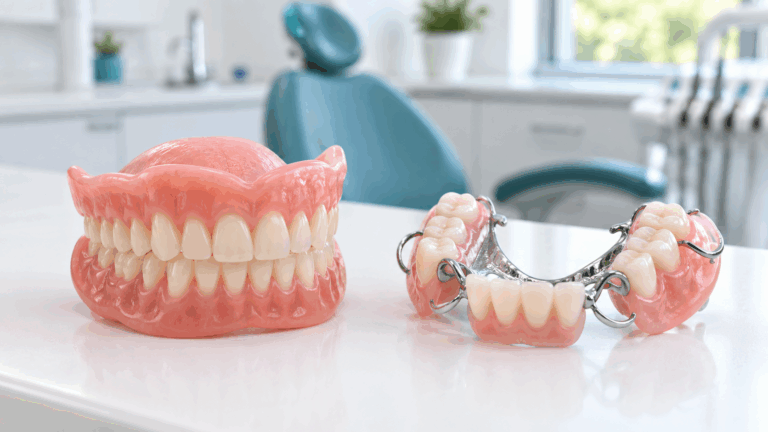
Replacement is also a chance to revisit your options. Some patients continue with a new denture, while others ask about partial dentures or dental implants for additional stability.
The question “how long do dentures last?” should therefore be answered with an examination, not by age alone.
A personalized answer to how long do dentures last includes comfort, stability, chewing, appearance, and the health of the tissues beneath the appliance.
Request a denture fit evaluation
If your dentures feel loose, uncomfortable, damaged, or harder to use, Smile Maker PA can evaluate the fit and explain whether relining, repair, or replacement may be appropriate. Contact Smile Maker PA, call (215) 969-2015, or request a Dental Appointment at 1775 Street Rd., Southampton, PA 18966.
An in-person evaluation is the clearest way to answer how long do dentures last in your specific situation.
FAQ about denture lifespan and fit
How often should dentures be relined?
There is no fixed interval. Relining is based on changes in fit, oral tissues, healing, and the condition of the appliance. An exam determines whether a reline will solve the problem.
If you wonder how long do dentures last after relining, the answer depends on the remaining condition of the appliance and future oral changes.
Can loose dentures be repaired?
Sometimes. Damage may be repairable, while looseness caused by tissue changes may require a reline. A worn or poorly designed appliance may need replacement instead.
An evaluation can answer both whether repair is appropriate and how long do dentures last after that repair.
Do gums change after getting dentures?
Yes. The ridge beneath a denture can change gradually after teeth are lost, which is one reason fit should be checked over time.
Can I use adhesive on loose dentures?
Adhesive may help a well-fitting denture when used as directed, but increasing dependence on it can signal a fit problem. Adhesive should not replace professional evaluation.
What causes dentures to crack?
Drops, accidental pressure, material fatigue, poor fit, and bite stress can contribute to cracks. Do not use household glue; keep the pieces and call the dental office.
When is denture replacement necessary?
Replacement may be needed when the denture is unstable, worn, broken, repeatedly repaired, difficult to clean, unattractive, or associated with persistent irritation or poor function.
If you are still asking how long do dentures last in your specific case, bring the appliance to Smile Maker PA for a fit and function evaluation.