How to clean dental implants starts with a simple routine: brush twice a day, clean around and between the implant restoration every day, and attend professional maintenance visits on the schedule recommended for you. The exact tools depend on whether you have one implant crown, an implant bridge, a removable implant denture, or a fixed full-arch restoration.
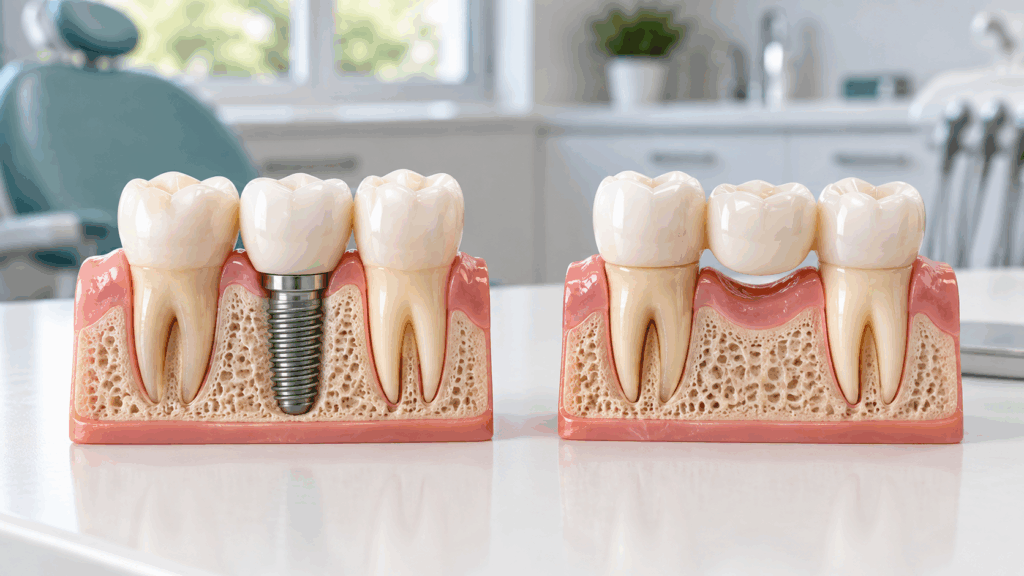
Implants cannot develop cavities, but the gums and bone around them can become inflamed or infected. Plaque control, healthy gums, and early attention to warning signs are essential parts of protecting an implant long-term.
Learning how to clean dental implants correctly also makes it easier to notice a change before it becomes a larger problem.
How to clean dental implants in seven steps
- Brush all tooth and implant surfaces twice daily with a soft-bristled manual or powered toothbrush.
- Angle the bristles gently toward the gumline around the implant crown or restoration.
- Clean between the implant and neighboring teeth every day with floss, an interdental brush, or another tool recommended for your restoration.
- Clean underneath implant bridges and fixed full-arch teeth using threaders, specialty floss, interdental brushes, or a water flosser as instructed.
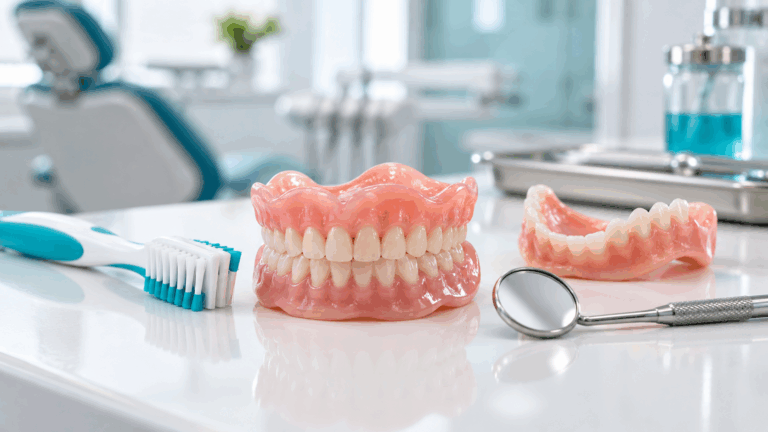
- If you have a removable implant denture, remove and clean the appliance and the implant attachments as directed.
- Avoid forcing a tool into an area where it catches, shreds, or causes repeated injury; ask the dental team to demonstrate a better size or technique.
- Keep scheduled implant checkups and professional cleanings so changes can be found early.
Which cleaning tools are safe for implants?
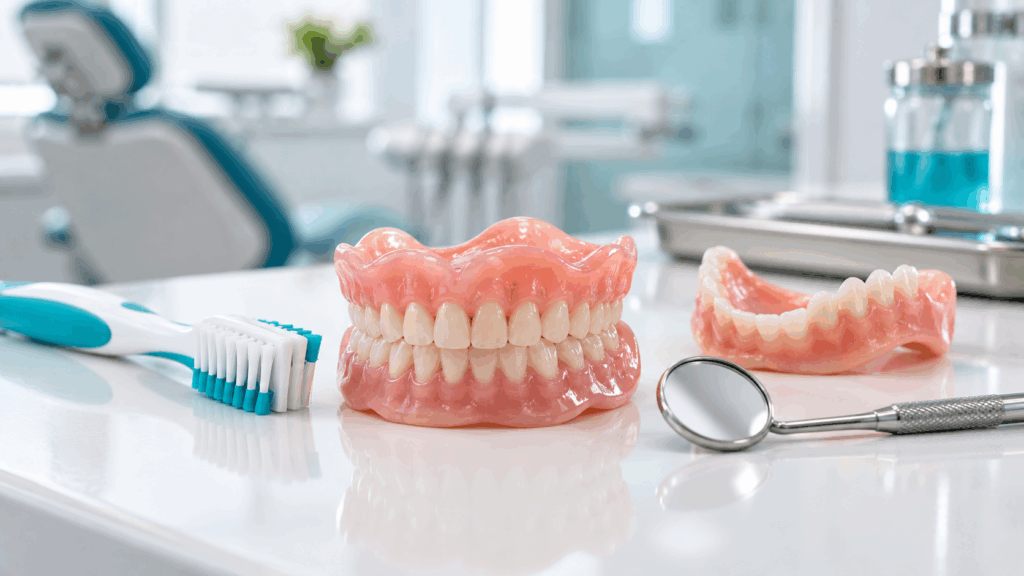
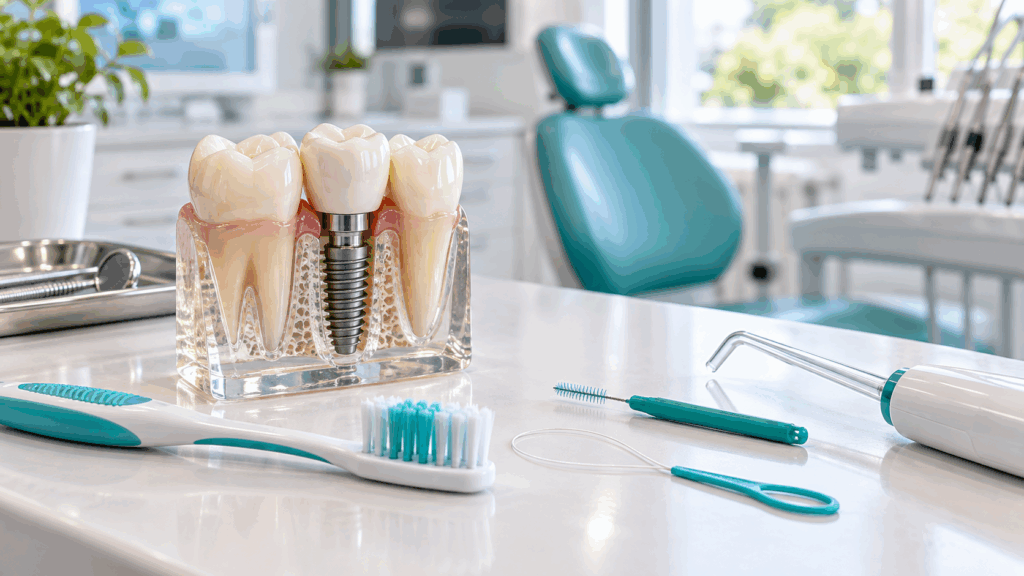
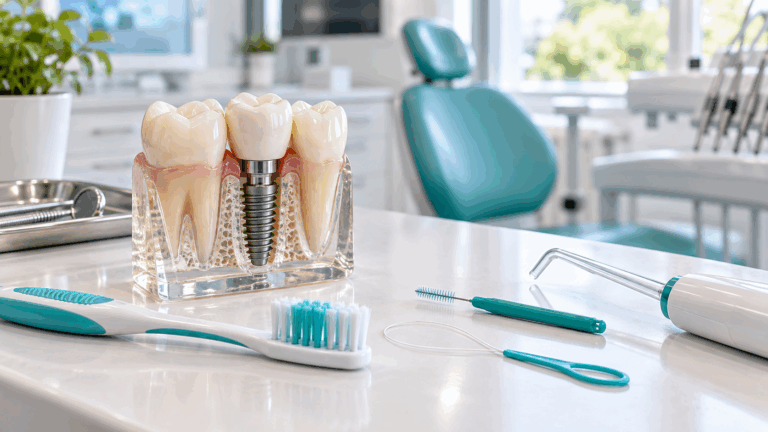
A soft toothbrush is the foundation. Depending on access and the shape of the restoration, the dental team may also recommend traditional floss, implant-specific floss, floss threaders, small interdental brushes, or a water flosser.
The best tool is one that reaches the plaque-retaining area without scratching the restoration or injuring the gums. Products and techniques are not interchangeable for every implant design. Bring your current tools to a maintenance visit if you want the team to check your technique.
If you are unsure how to clean dental implants with your current brush or floss, ask for a hands-on demonstration using the exact restoration in your mouth.
The best way to learn how to clean dental implants is to practice with tools sized for the spaces around your own restoration.
| Restoration | Areas that need attention | Tools that may be recommended |
|---|---|---|
| Single implant crown | Gumline and both sides of the crown | Soft brush, floss, small interdental brush |
| Implant bridge | Gumline, between implants, and under the replacement teeth | Floss threader, specialty floss, interdental brush, water flosser |
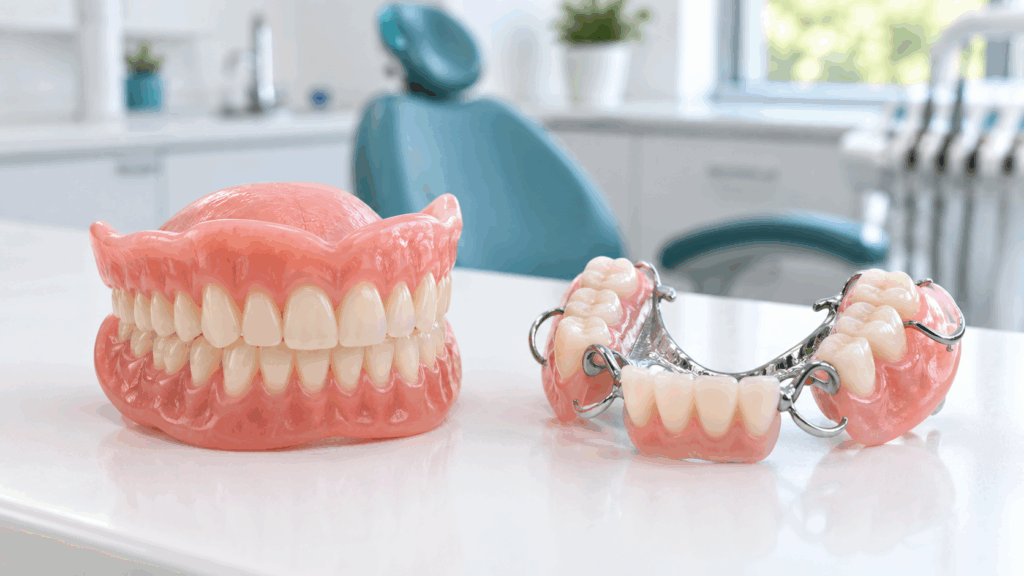
| Removable implant denture | Denture surfaces, attachments, gums, tongue, and palate | Denture brush, soft toothbrush, attachment brush, approved cleanser |
| Fixed full-arch restoration | Gumline and the space beneath the restoration | Angled brush, threader, specialty floss, interdental brush, water flosser |
Why professional implant maintenance matters
Home care removes plaque you can reach. Professional visits evaluate areas that are difficult to inspect yourself, including gum inflammation, bleeding, pocket changes, calculus, bite forces, restoration wear, and the stability of implant components.
The appropriate interval depends on your history and risk factors. Patients with previous gum disease, smoking, diabetes, complex full-arch restorations, limited dexterity, or recurring plaque buildup may need more frequent care. Smile Maker PA can personalize an implant maintenance schedule instead of applying one interval to everyone.
Professional visits can also confirm how to clean dental implants when access changes or a new restoration is delivered.
Dental implant maintenance and gum health
Healthy tissue around an implant is just as important as the visible replacement tooth. Plaque can cause peri-implant mucositis, an inflammatory condition in the soft tissue around an implant. If inflammation progresses with supporting bone loss, it is called peri-implantitis.
The American Academy of Periodontology lists red or tender gums and bleeding during brushing among the signs of peri-implant disease. It also identifies poor plaque control, smoking, diabetes, and a history of periodontal disease as risk factors.
If you have gum concerns, Smile Maker PA offers periodontal services as part of comprehensive care.
Understanding how to clean dental implants at the gumline helps limit plaque where peri-implant inflammation begins.
Warning signs to call about
Contact the dental office if you notice:
- Bleeding that is new, frequent, or increasing around an implant
- Redness, swelling, tenderness, or pus near the implant
- A persistent bad taste or odor from one area
- Gum recession or more of the implant becoming visible
- Pain when biting or a change in how the teeth meet
- A crown, bridge, denture, or implant component that feels loose
- Food trapping that has become difficult to control
An implant that feels loose requires prompt evaluation. Sometimes the restoration or a screw is the moving part rather than the implant in the bone, but only an examination can determine the cause. Do not keep chewing on the area or try to tighten anything yourself.
Knowing how to clean dental implants does not replace an examination when bleeding, swelling, pain, drainage, or movement appears.
Smoking, grinding, and other long-term risks
Smoking is associated with a higher risk of problems around implants and can interfere with gum health. If you smoke or vape, tell the dental team so your maintenance plan can reflect that risk.
Clenching or grinding can overload implant restorations and natural teeth. A change in the bite, chipping, repeated loosening, or morning jaw soreness should be discussed. A protective night guard may be recommended in selected cases.
Medical conditions and medications can also affect oral health. Keep your health history current and tell the office about changes, including diabetes control, immune conditions, or medications that affect the mouth or bone.
Single implants vs full-arch implant care
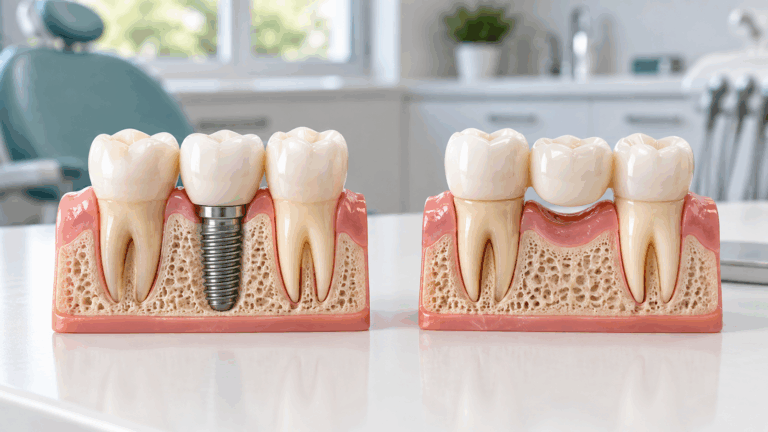
A single implant crown is often cleaned much like a natural tooth, with special attention at the gumline and between teeth. A fixed full-arch restoration has a larger area beneath it where plaque and food can collect, so threaders, interdental brushes, or a water flosser may be important.
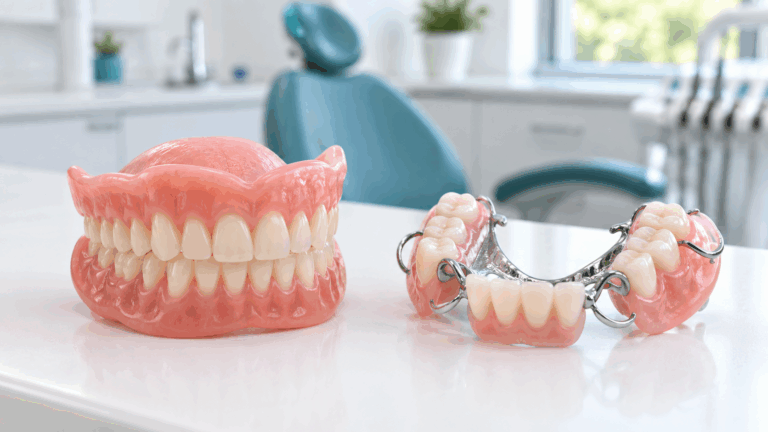
A removable implant denture should be removed and cleaned according to the instructions for that appliance. The attachments and gums also need daily care. Never assume that a restoration described as “permanent” is maintenance-free.
Whether you have titanium or ceramic implants, the cleaning plan should match the restoration and the health of the surrounding tissues.
Knowing how to clean dental implants is especially important with bridges and full-arch restorations because some plaque-retaining surfaces are hidden from view.
Ask the dental team to demonstrate how to clean dental implants under a bridge or full-arch restoration without damaging the surrounding tissue.
Schedule an implant maintenance visit
Smile Maker PA provides dental implant evaluation, restoration, and ongoing care in Southampton, PA. For help with cleaning technique or a warning sign around an implant, call (215) 969-2015 or request a Dental Appointment.
Your maintenance visit is a good time to review how to clean dental implants with the products you already use at home.
FAQ about cleaning dental implants
Do dental implants get cavities?
The implant and artificial crown do not develop cavities, but nearby natural teeth can. Plaque can also inflame the gums and supporting tissues around an implant.
Can implants get gum disease?
Implants can develop inflammatory conditions called peri-implant mucositis and peri-implantitis. Bleeding, redness, swelling, tenderness, or bone loss require professional attention.
What floss is safe for dental implants?
The safest choice depends on access and restoration design. Your dental team may recommend standard floss, implant-specific floss, a threader, an interdental brush, or a water flosser and show you how to use it.
That demonstration should include how to clean dental implants without forcing floss or a brush against the tissue.
How often should implant checkups be scheduled?
The interval is individualized. Many patients are seen at regular preventive visits, while higher-risk patients or complex restorations may need more frequent maintenance.
At each checkup, ask whether how to clean dental implants at home needs to change based on the current tissue and restoration design.
What causes a bad taste around an implant?
Food trapping, plaque, gum inflammation, drainage, or a restoration problem may contribute. A persistent localized bad taste or odor should be evaluated.
Can a dental implant become loose?
Yes, although movement may come from the crown, bridge, attachment, screw, or the implant itself. Stop chewing on the area and contact the dental office promptly.
For personalized guidance on how to clean dental implants, bring your toothbrush, floss, or water flosser to your next maintenance visit.