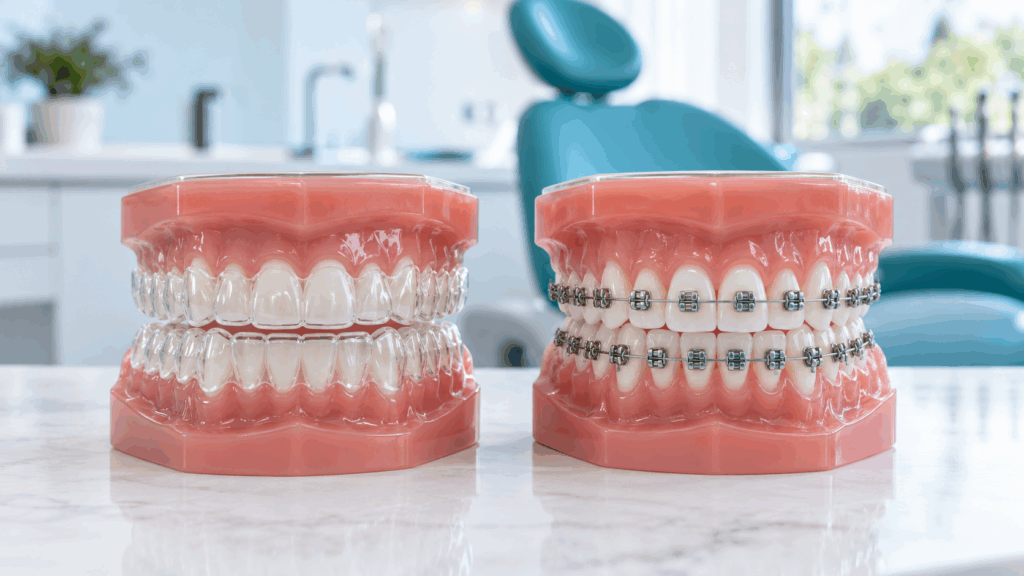
Invisalign vs braces for adults is not simply a choice between clear and visible treatment. Invisalign uses removable clear aligners, while braces use brackets and wires that stay attached to the teeth. Aligners offer discretion and flexibility, but they must be worn consistently. Braces provide continuous control and may be more predictable for certain complex tooth and bite movements.
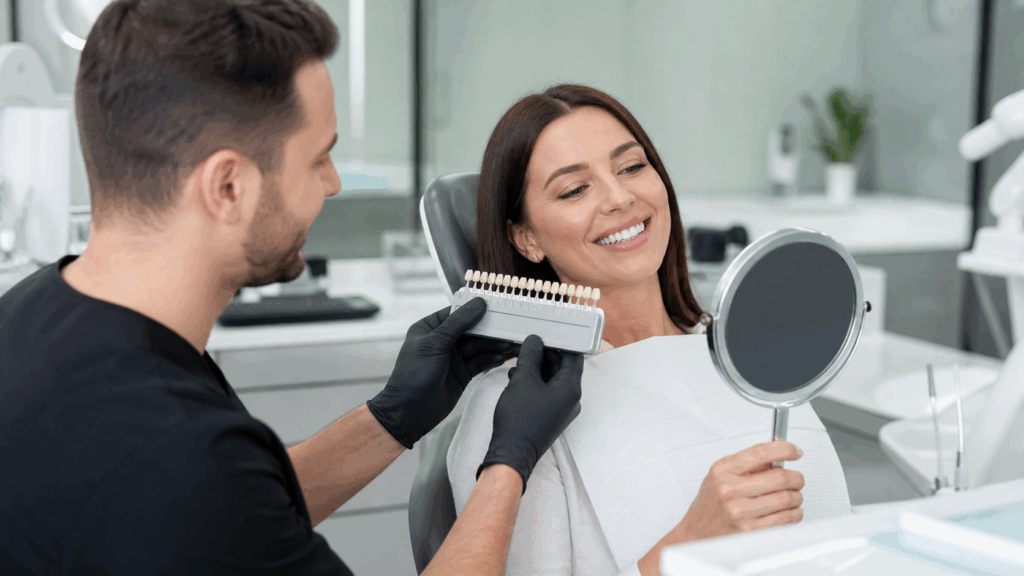
At Smile Maker PA in Southampton, PA, an evaluation can show whether clear aligners fit your needs. The right recommendation depends on alignment, bite, gum health, restorative work, treatment goals, and your ability to follow the daily routine.
This Invisalign vs braces for adults comparison focuses on the clinical and lifestyle differences that matter after treatment begins.
Invisalign vs braces for adults: quick answer
Invisalign may be a strong fit for adults who want a less noticeable removable option and can wear aligners as directed. Braces may be preferred when the case requires movements better controlled with fixed appliances or when consistent aligner wear is unlikely. Some adults can be treated effectively with either option, making lifestyle and clinical details important.
| Factor | Invisalign clear aligners | Braces |
|---|---|---|
| Appearance | Clear and less noticeable | Metal or ceramic brackets are visible to varying degrees |
| Removability | Removed for eating, drinking anything except water, and oral hygiene | Fixed to the teeth during treatment |
| Daily responsibility | Requires consistent wear and tray management | Works continuously but still requires careful cleaning and appointment attendance |
| Food restrictions | Few restrictions when aligners are removed | Hard, sticky, or damaging foods may need to be avoided |
| Cleaning | Teeth are brushed and flossed after removing trays | Special care is needed around brackets and under wires |
| Case selection | Can treat many alignment and bite concerns | Can treat a broad range, including many complex cases |
| Comfort pattern | Pressure with each new set; smooth tray edges | Pressure after adjustments; brackets or wires may irritate cheeks temporarily |
Appearance and confidence
Invisalign trays are transparent and fit closely over the teeth, so they are less noticeable in everyday conversation and photos. Attachments may be placed on certain teeth to help guide movement, and these small tooth-colored shapes can still be visible at close range.
Traditional metal braces are more apparent. Ceramic braces may be less noticeable, but they are still fixed appliances. For many adults, appearance matters at work or social events; for others, predictability and simplicity matter more.
Appearance is only one part of an Invisalign vs braces for adults decision, but it can affect confidence and daily comfort during treatment.
Case complexity and candidacy
Clear aligner treatment can address many cases involving crowding, spacing, and selected bite concerns. Braces may offer advantages for some complex rotations, significant bite corrections, impacted teeth, or cases requiring highly controlled movement.
The American Association of Orthodontists notes that clear aligners are not right for everyone and that some cases are treated more predictably with braces. A clinical exam and diagnostic records are necessary because two smiles that look similar can have different root positions and bite relationships.
Gum health also matters. Active gum disease should be addressed before moving teeth. Existing crowns, bridges, implants, missing teeth, and planned restorative work must be included in the sequence.
An Invisalign vs braces for adults evaluation must therefore include bite relationships and dental health, not photographs alone.
Daily routine and compliance
Clear aligners only work while they are being worn. Patients generally need to wear them most of the day and night, removing them for meals, most drinks, brushing, and flossing. Lost trays, frequent extended breaks, or moving to the next set without instructions can delay progress.
Braces remove the decision to wear the appliance because they stay attached. However, patients still need to protect brackets, clean thoroughly, attend adjustment visits, and use elastics or other accessories when prescribed.
If you travel, speak publicly, or have an unpredictable work schedule, consider which routine you can realistically maintain for months rather than which option sounds easier on day one.
Daily consistency often determines whether an Invisalign vs braces for adults plan stays on schedule.
Eating and drinking
With Invisalign, aligners are removed for food and for beverages other than plain water unless the dental team gives different instructions. Teeth should be cleaned before the trays go back in to reduce trapped food, odor, staining, and decay risk.
Braces stay in during meals. Hard, sticky, and very chewy foods can bend wires or loosen brackets, so dietary adjustments may be needed. Food also collects around fixed appliances, making careful brushing and interdental cleaning important.
Comfort and speech
Both methods move teeth by applying controlled force, so temporary pressure or tenderness is normal. Invisalign trays may feel tight when a new set begins, and the tongue or cheeks may need a short adjustment period. Brackets and wires may irritate soft tissues, especially after placement or an adjustment.
Clear aligners can temporarily affect speech, usually with a mild lisp that improves as the tongue adapts. Braces can also change how the lips and cheeks feel. Persistent sharp edges, significant pain, or a broken appliance should be reported.
Comfort in an Invisalign vs braces for adults comparison includes both tooth pressure and how the appliance contacts the lips, cheeks, and tongue.
What affects treatment time?
Neither Invisalign nor braces is automatically faster for every adult. Treatment time depends on the starting bite, amount and type of tooth movement, biological response, missed visits, broken appliances, aligner wear, and whether refinements are needed.
Adults may also need coordination with general dentistry or restorative care. The most reliable timeline comes from a personalized plan, followed by consistent appointments and instructions.
The Invisalign vs braces for adults timeline should be based on the required movements and patient cooperation rather than a universal promise.
Cost factors
Cost depends on case complexity, treatment length, diagnostic records, number of aligners or adjustments, refinements, retainers, and the type of appliance. Insurance orthodontic benefits, when available, vary by plan and may have age or lifetime limits.
A consultation should provide a complete estimate and explain what is included. Compare the full plan rather than assuming clear aligners or braces always cost more.
For a useful Invisalign vs braces for adults cost comparison, ask whether records, refinements, emergency visits, and retainers are included.
Retainers after Invisalign or braces
Retainers are usually needed after either treatment. Teeth can shift throughout life, and the tissues around them need support while the result stabilizes. The type of retainer and wearing schedule should be followed exactly.
Losing or stopping a retainer can allow movement. Contact the office if it no longer fits instead of forcing it over teeth that may have shifted.
Choosing an adult orthodontic option
Before deciding, ask:
- Which bite and alignment problems need correction?
- Can both Invisalign and braces predictably accomplish the goal?
- Are attachments, elastics, tooth shaping, or extractions expected?
- How many hours of daily aligner wear are required?
- What happens if a tray is lost or a bracket breaks?
- What is included in the fee, including refinements and retainers?
- How will existing dental work affect treatment?
Smile Maker PA offers Invisalign for adults in Southampton as part of a personalized dental plan. The service page provides details about clear aligner treatment without creating a separate competing appointment page.
The most useful Invisalign vs braces for adults recommendation is the one that can predictably address your bite and that you can follow consistently.
Schedule an Invisalign evaluation in Southampton, PA
To find out whether Invisalign fits your smile and bite, contact Smile Maker PA, call (215) 969-2015, or request a Dental Appointment at 1775 Street Rd., Southampton, PA 18966.
FAQ about Invisalign vs braces for adults
Is Invisalign faster than braces?
Not automatically. Timing depends on case complexity, the required movements, aligner wear, appointment attendance, and biological response. The faster option varies by patient.
An Invisalign vs braces for adults timeline is most accurate after diagnostic records and a personalized movement plan.
Which treats complex cases better?
Braces may provide more predictable control for some complex movements and bite problems. Invisalign can treat many adult cases, but candidacy must be evaluated individually.
The Invisalign vs braces for adults recommendation should match the complexity of the bite rather than appearance alone.
Can adults use clear aligners?
Yes. Adults can be candidates when their teeth and gums are healthy enough for movement and the case is suitable for aligner treatment.
Does Invisalign hurt?
Temporary pressure or tenderness can occur when a new set of aligners begins. Severe, persistent, or unusual pain should be reported to the dental office.
How often are Invisalign aligners worn?
Aligners are generally worn most of the day and night and removed for eating, most drinks, brushing, and flossing. Follow the exact schedule provided for your plan.
Are retainers required after treatment?
Retainers are usually recommended after both Invisalign and braces to help maintain the new tooth positions. Long-term wear instructions vary by patient.
An Invisalign vs braces for adults consultation at Smile Maker PA can clarify candidacy, expected responsibilities, and the next diagnostic steps.