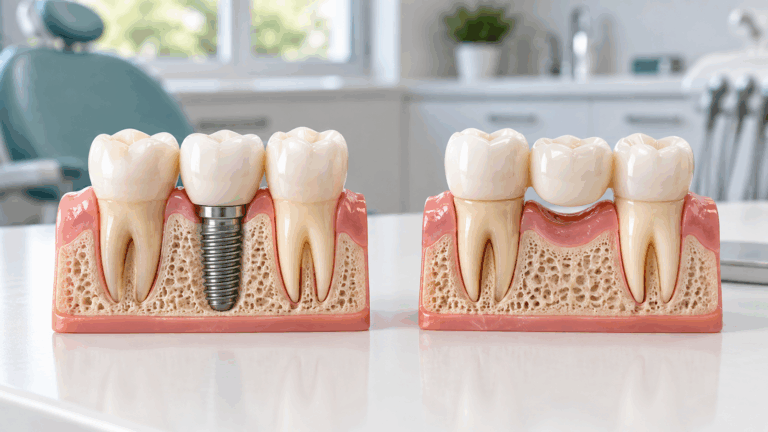
Dental implant vs bridge is a common decision when one tooth is missing or cannot be restored. An implant replaces the missing tooth root and supports its own crown. A traditional bridge fills the space with an artificial tooth connected to crowns on neighboring teeth. Both can restore appearance and chewing, but they differ in treatment, support, cleaning, timing, and effects on adjacent teeth.
At Smile Maker PA in Southampton, PA, the better option depends on bone and gum health, the condition of nearby teeth, the location of the gap, bite forces, medical history, timing, maintenance preferences, and budget.
A dental implant vs bridge evaluation should consider the entire treatment plan rather than comparing only the visible replacement tooth.
Dental implant vs bridge: quick comparison
| Factor | Dental implant | Traditional dental bridge |
|---|---|---|
| Main support | Implant placed in the jawbone | Neighboring teeth support connected crowns |
| Adjacent teeth | Usually do not need to be reduced for support | Usually prepared for crowns |
| Treatment timing | Includes placement and a healing phase | Often completed without implant healing time |
| Cleaning | Brush and clean around both sides like a separate tooth | Brush plus clean under the connected replacement tooth |
| Bone in the gap | Implant provides root-like stimulation in the treated area | Bridge replaces the visible tooth but not the root |
| Surgery | Implant placement is a surgical procedure | Traditional bridge treatment is generally nonsurgical |
| Best fit | Adequate health and bone, with a maintainable site | Suitable supporting teeth and a bridge-friendly span |
How a single-tooth dental implant works
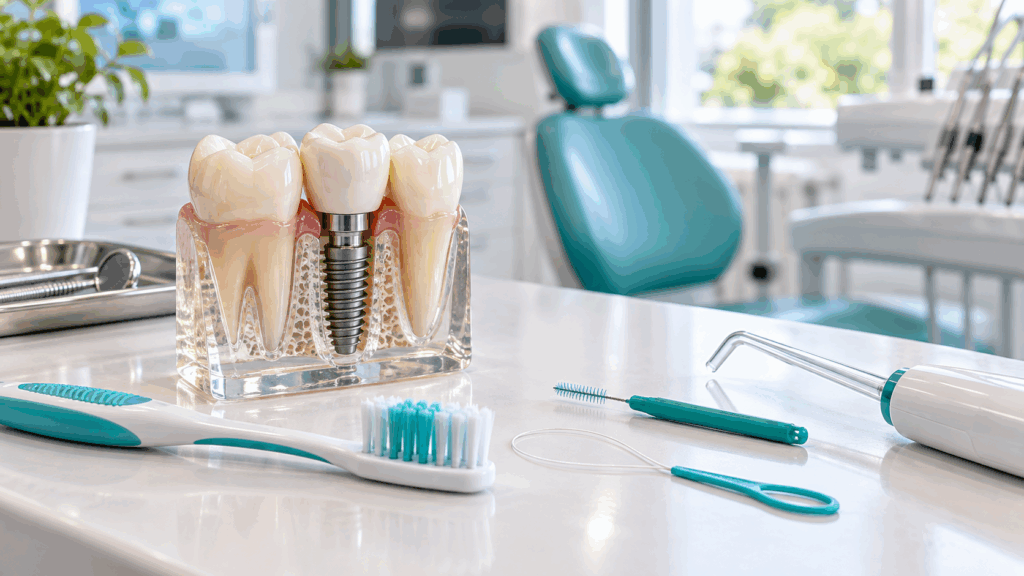
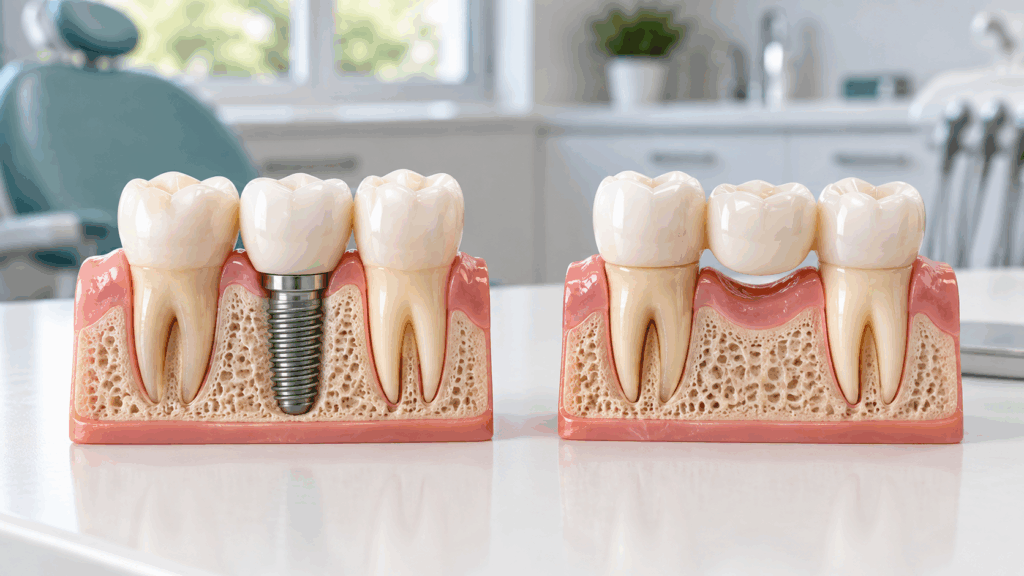
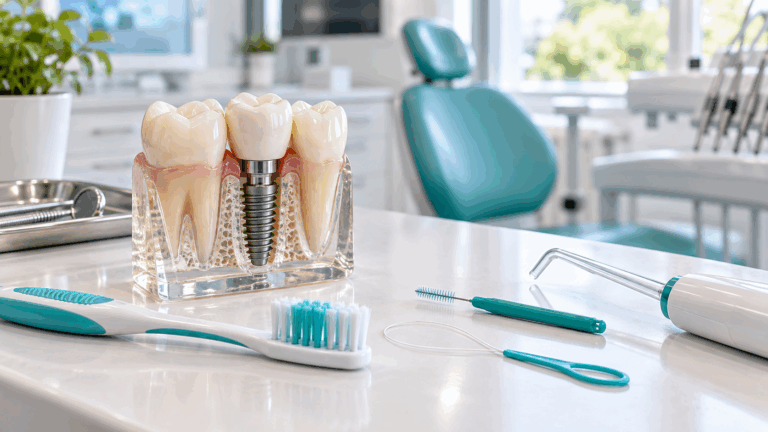
A dental implant is placed in the jaw at the missing-tooth site. After healing and integration, it supports an abutment and crown. The implant stands independently, so the neighboring teeth usually do not have to be shaped merely to support the replacement.
Implant treatment requires sufficient bone and healthy surrounding tissue. Some patients need an extraction, bone grafting, gum treatment, or additional healing before the final crown is placed. Diagnostic imaging and bite planning help determine whether the site is suitable.
How a dental bridge works
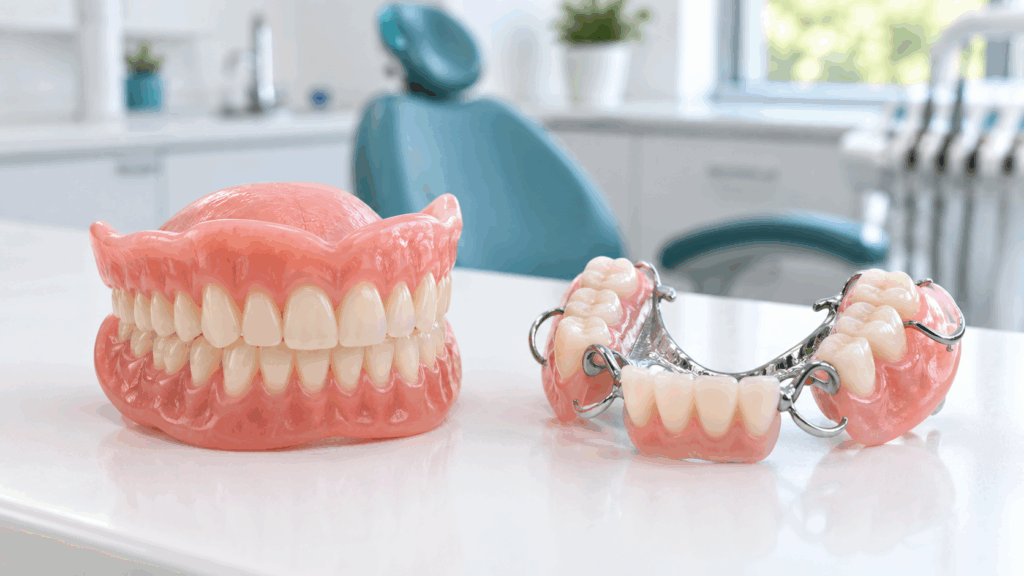
A conventional dental bridge uses crowns on teeth next to the space to support an artificial tooth between them. The pieces are connected, creating a fixed restoration that is not removed for daily cleaning.
A bridge can be especially practical when the adjacent teeth already need crowns because of large fillings, fractures, or other damage. However, healthy supporting teeth generally must be prepared, and the patient must clean beneath the replacement tooth to protect the supporting teeth and gums.
Candidacy: which option fits the mouth?
A single-tooth implant may be considered when the patient has adequate bone or can receive grafting, acceptable gum health, manageable medical risks, and enough space for a properly positioned implant and crown.
A bridge may be considered when the teeth on both sides can provide reliable support, the span is suitable, and the bite can be managed. The health of the supporting teeth is critical because decay, fracture, or gum problems affecting one support can compromise the entire bridge.
If the tooth is still present but cannot be saved, planning should begin before or around the time of tooth extraction. This helps preserve options and coordinate temporary tooth replacement when needed.
For that reason, the dental implant vs bridge decision is often easiest to make before the failing tooth is removed.
Advantages and limitations
Potential advantages of an implant
- Replaces the missing root as well as the visible tooth
- Usually avoids preparing healthy neighboring teeth for support
- Can be cleaned as an individual restoration when access is favorable
- Helps support bone in the implant area
Potential limitations include surgery, healing time, bone or gum requirements, and the possibility of additional procedures. Implant restorations also require lifelong hygiene and professional monitoring.
Potential advantages of a bridge
- Avoids implant surgery
- May provide a faster route to a fixed tooth in selected cases
- Can restore neighboring teeth that already need crowns
- Has a familiar fixed design with no removable appliance
Potential limitations include preparation of supporting teeth, special cleaning beneath the replacement tooth, and dependence on the long-term health of the support teeth.
Treatment steps and timeline
Implant treatment may involve imaging, removal of a failing tooth, grafting when needed, implant placement, healing, and delivery of the final crown. Some steps can sometimes be combined, but not every patient is a candidate for immediate placement or immediate loading.
Bridge treatment commonly includes preparing the supporting teeth, making a scan or impression, placing a temporary bridge, and delivering the final restoration. The timeline can be shorter because there is no implant-integration period, although tooth and gum conditions may add steps.
The dental implant vs bridge timeline should include every required step, not only delivery of the visible replacement tooth.
What affects the cost?
An implant estimate may include imaging, extraction, grafting, implant placement, the abutment, and the crown. A bridge estimate depends on the number of units, materials, supporting-tooth treatment, and whether any tooth needs a buildup, root canal, or other care.
Upfront cost is only part of the comparison. Consider maintenance, the condition of neighboring teeth, expected repairs, and what may happen if one component fails. Insurance benefits vary, so a personalized plan is more useful than a generic price.
A complete dental implant vs bridge estimate should clearly identify procedures involving the missing-tooth site and the neighboring teeth.
Longevity and maintenance
Both options can serve for many years, but neither comes with a lifetime guarantee. Longevity depends on hygiene, gum health, bite forces, grinding, smoking, medical factors, materials, and regular care.
Implants require cleaning at the gumline and monitoring for inflammation or mechanical changes. Bridges require careful cleaning around the crowns and underneath the artificial tooth. The American Dental Association's MouthHealthy implant overview notes that implants can replace missing teeth without removing good tooth structure from adjacent teeth, which is an important comparison point when those teeth are healthy.
Long-term dental implant vs bridge maintenance depends on daily plaque control and regular professional evaluation.
A practical decision checklist
Ask these questions during your consultation:
- Are the neighboring teeth healthy, or do they already need crowns?
- Is there enough bone and space for an implant?
- Would grafting or gum treatment be required?
- How soon do I need a fixed replacement tooth?
- Am I comfortable with implant surgery and healing?
- Can I clean under a bridge or around an implant consistently?
- How do the total treatment plans and long-term maintenance compare?
The answer should be based on the entire mouth, not a single isolated advantage.
Use this dental implant vs bridge checklist to compare the same health, timing, cleaning, and cost factors for both plans.
Your dental implant vs bridge comparison should also include what you can clean reliably and how each option affects future treatment of neighboring teeth.
Request a tooth-replacement consultation
Smile Maker PA can help you compare a single-tooth implant with a dental bridge in Southampton. Contact the office, call (215) 969-2015, or request a Dental Appointment.
Bring your dental implant vs bridge questions to the consultation so the team can explain how each option applies to your mouth.
FAQ about dental implants and bridges
Which lasts longer, an implant or a bridge?
Both can last many years. The outcome depends on hygiene, bite, gum health, supporting teeth, implant health, materials, and maintenance. An exam is needed for an individual prognosis.
No dental implant vs bridge longevity estimate is complete without evaluating the supporting tissues and bite.
Is a bridge faster than an implant?
Often, yes. A traditional bridge does not require implant integration, while implant treatment usually includes a healing period. Additional treatment can change either timeline.
A dental implant vs bridge timeline should still account for extractions, grafting, healing, or treatment needed by supporting teeth.
Does a bridge damage nearby teeth?
A traditional bridge usually requires reshaping the supporting teeth for crowns. That is a meaningful tradeoff when those teeth are healthy, but it may be reasonable when they already need restoration.
Who cannot get a dental implant?
Some patients need medical coordination, gum treatment, smoking cessation support, bone grafting, or another option. Candidacy is determined through health review, examination, and imaging.
Which option is easier to clean?
An individual implant crown often allows cleaning on both sides like a separate tooth. A bridge requires cleaning under the connected replacement tooth. Technique and restoration design matter for both.
Your dental implant vs bridge decision should include a demonstration of the cleaning routine for each proposed restoration.
What happens if I wait to replace a missing tooth?
Nearby teeth may shift, the bite may change, and bone in the area can decrease over time. The effects vary by location, so ask a dentist how delay could affect your options.
Smile Maker PA can complete a dental implant vs bridge assessment and explain the findings in the context of your health, timeline, and priorities.